
Ryan Rumsey finds place in hockey, speaks on local autism advocacy
April 12, 2026 at 4:06 AM


At Blue Cross Arena in Rochester on April 4, Ryan Rumsey scored two goals in the Buffalo Sabres Thunder’s final game of the season, capping a first year on the special hockey team that he says fulfilled a dream he carried from Alberta to Fort Erie.
The 48-year-old resident also spent the same weekend at an international autism conference in Niagara Falls, where he spoke about what it means to learn he was autistic only in his 40s.
Rumsey, a Fort Erie athlete and autistic self-advocate, told Fort Erie Radio he moved from Edmonton in 2015 in part to live closer to the Sabres, the NHL club he had followed since childhood through family ties to former goaltender and current Hall of Famer Darcy Wakaluk.
“It’s just been a dream of mine since I was a little kid to be a Buffalo Sabre,” said Rumsey. “Now I literally am a Buffalo Sabre and get to wear the uniform.”
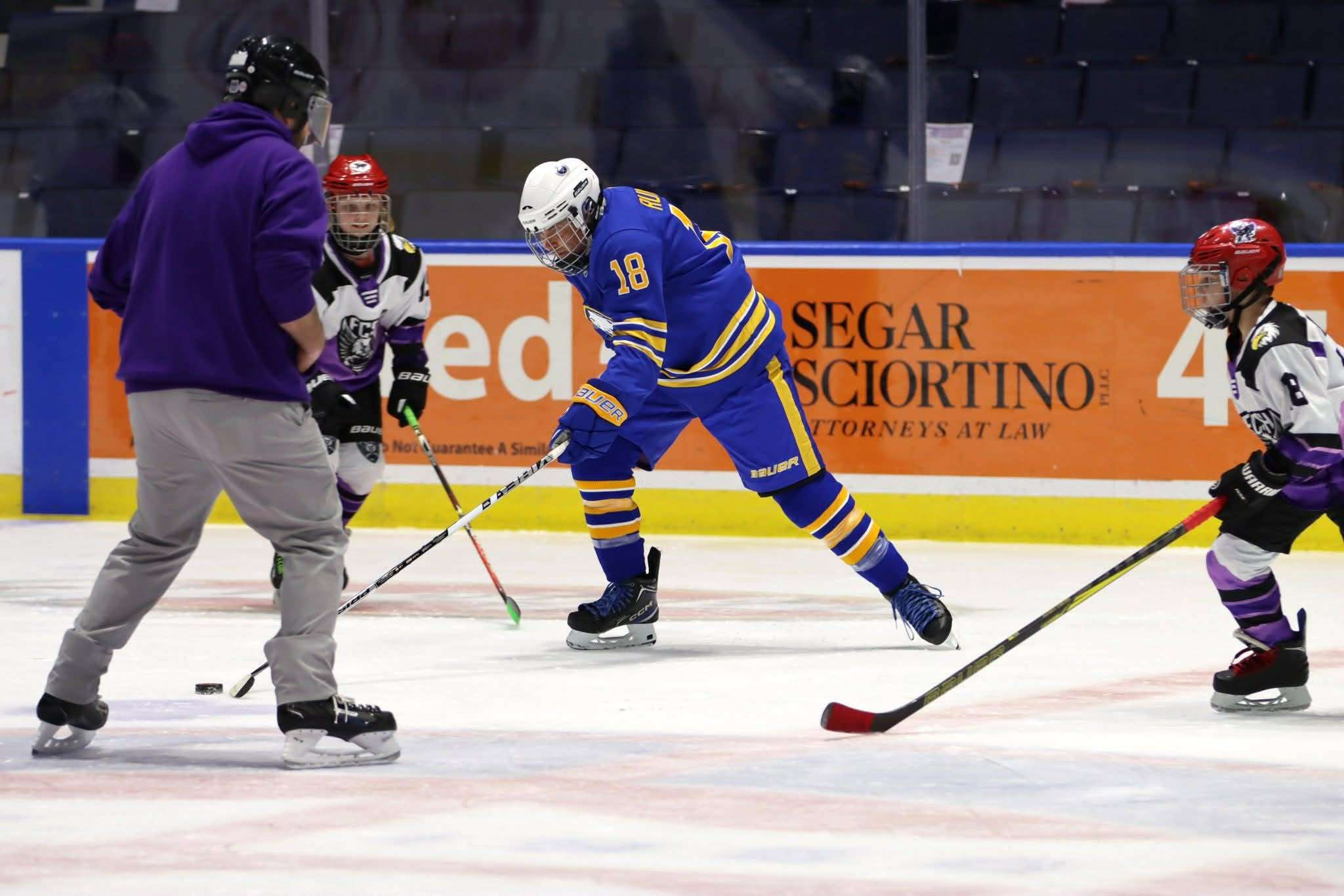 Credit: Ryan Rumsey | Buffalo Sabres Thunder
The Buffalo Sabres Thunder play through the American Special Hockey Association. Rumsey joined after seeing a Facebook post last year and contacting head coach Gary Panek. His first practice came in October 2025 after months spent gathering second-hand equipment for a switch he had never expected to make.
By the end of the season, according to Rumsey, he was skating on the top line and scoring often. The team practised every Sunday morning in Buffalo and also played in tournaments in Buffalo, Rochester and St. Catharines.
“When I want something, I give it my all, and I want to be as good as I possibly can to help everybody else on the team,” said Rumsey.
Rumsey described the team as competitive and structured. Athletes bring different strengths to one another. That exchange, he said, has shaped the way he thinks about leadership and belonging in disabled sport.
“We learn from each other, and I really enjoy being on this team,” said Rumsey.
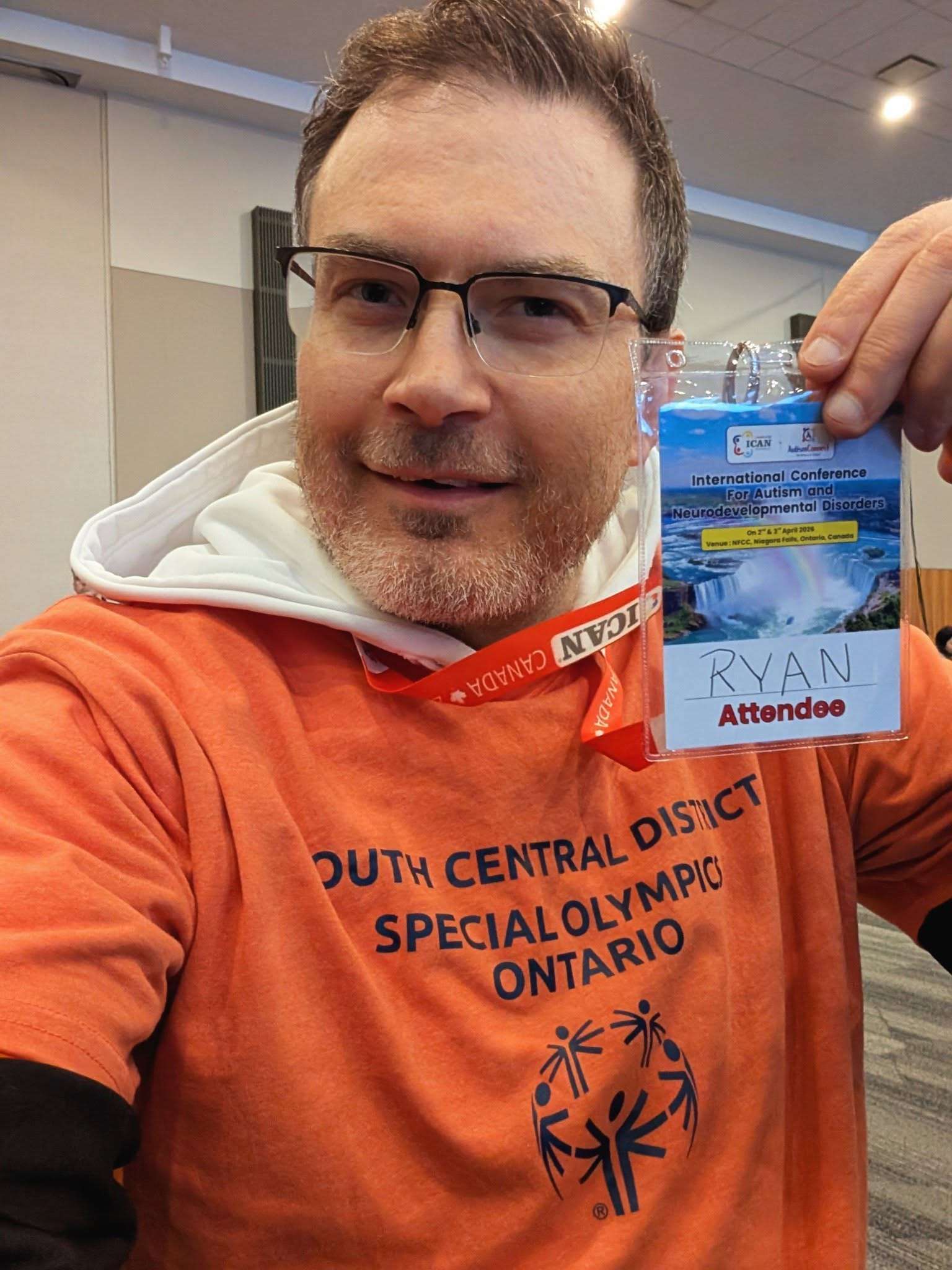 Credit: Ryan Rumsey | Facbook
The same weekend, Rumsey attended one day of the International Conference for Autism and Neurodevelopmental Disorders in Niagara Falls. The program included a panel of doctors, scientists and advocates and the world premiere of a new documentary by Temple Grandin, whom he met there.
“I didn’t know I was autistic until I was in my 40s, and it really changed the way that I looked at my whole life to that point,” said Rumsey.
That diagnosis recast much of his earlier life, according to Rumsey. He grew up outside disability-specific programs, played sports in mainstream settings and spent years being read through other labels.
The event was more geared more toward caregivers, professionals and corporate exhibitors than autistic people attending on their own, according to Runsey, and he described some sessions as highly technical, with detailed discussion of genes and DNA.
“As somebody who’s autistic, I didn’t necessarily get the vibe that it was geared towards me,” said Rumsey. “When we talk about it, being a spectrum, it has a lot of meaning because everybody that is autistic is very unique to themselves.”
Rumsey urges for more people in Niagara to understand how wide that range can be. Autistic people are present in many different spaces, including high-level athletics, and he wants those abilities recognized plainly.
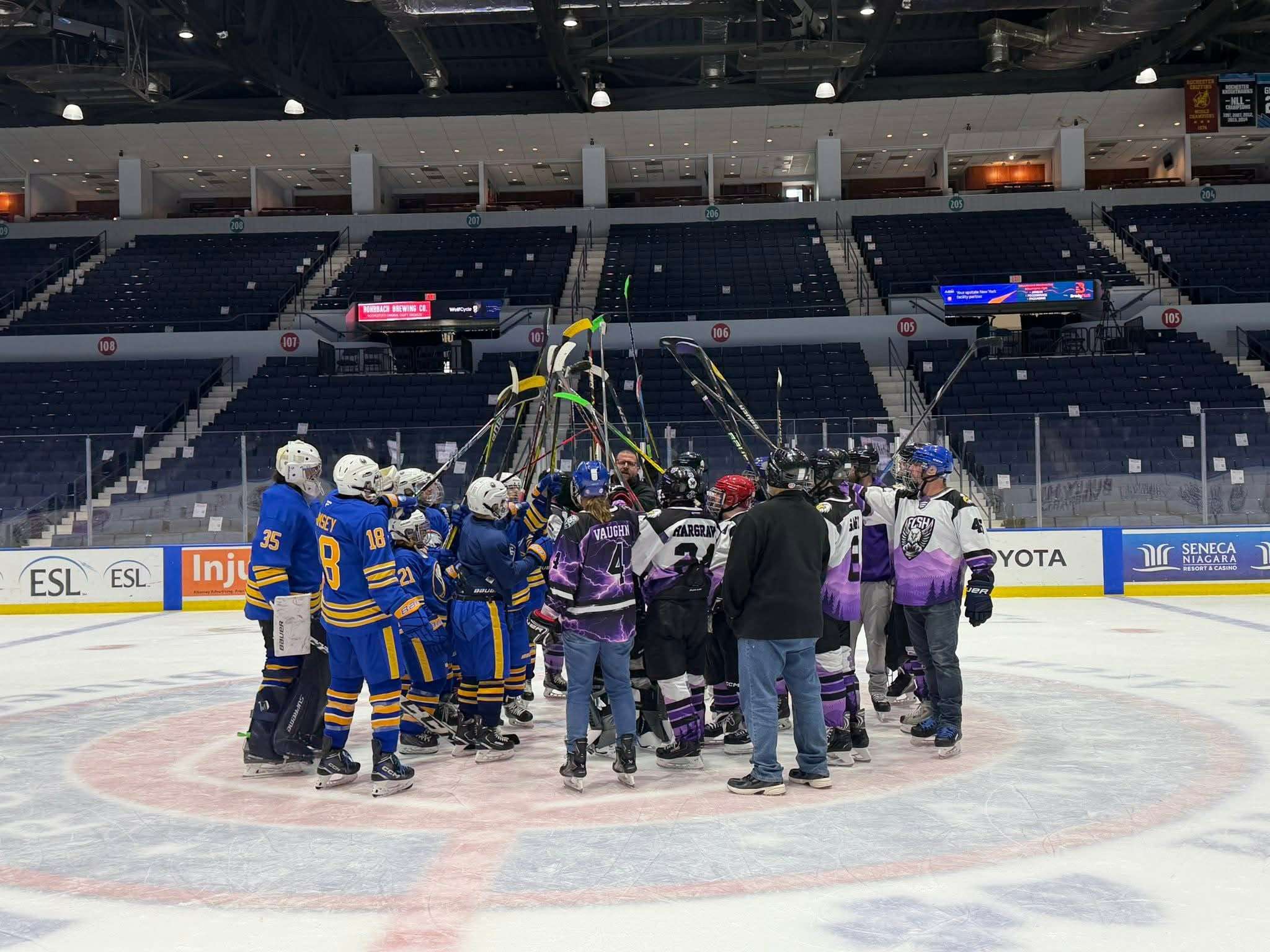 Credit: Ryan Rumsey | Buffalo Sabres Thunder
He described special hockey as serious competition with emotional weight for players who train hard, want ice time and care about results. It’s a view runs against a common assumption that disabled sport exists only for participation.
“This isn’t just recreation for us. This has real meaning beyond the fun aspect,” said Rumsey. “There are people who are autistic in different spaces that have very high ability to achieve all different kinds of things.”
His first season with the Sabres Thunder has ended but he indicated he expects to keep building his role in special hockey while continuing to speak on autism and mental health in the region.

UPDATE | Police in Fort Erie need assistance locating missing Jayden Blackburn-Johnson

Ridgeway daycare recovers after 15-day gastroenteritis outbreak
Badawey says there will be three top Fort Erie issues if re-elected in new Niagara South riding
About The Author

Andrew Hawlitzky
Andrew is a Niagara community journalist who has covered everything from local politics to annual festivals and breaking news. He works to make local news a platform where community voices lead the conversation. "If you don't like the news, go out and make some!"

Stay Informed