
Brain Injury Association debt-free thanks to $151K provincial grant
August 1, 2026 at 7:04 AM


The Brain Injury Association of Fort Erie says a $151,100 Ontario Trillium Foundation grant has erased its longstanding debt and given the nearly 40-year-old charity stable finances for the first time.
The grant, awarded in 2024 through the foundation’s Resilient Communities Fund, also expanded the charity’s art and music programs and paid for its first operations manager. Board members celebrated the funding at the association’s Fort Erie centre Friday morning.
Before the grant, the charity routinely spent its money on building repairs and participant services while its debt waited, said Johnna Wofenberg, who read the association’s formal funding announcement Friday.
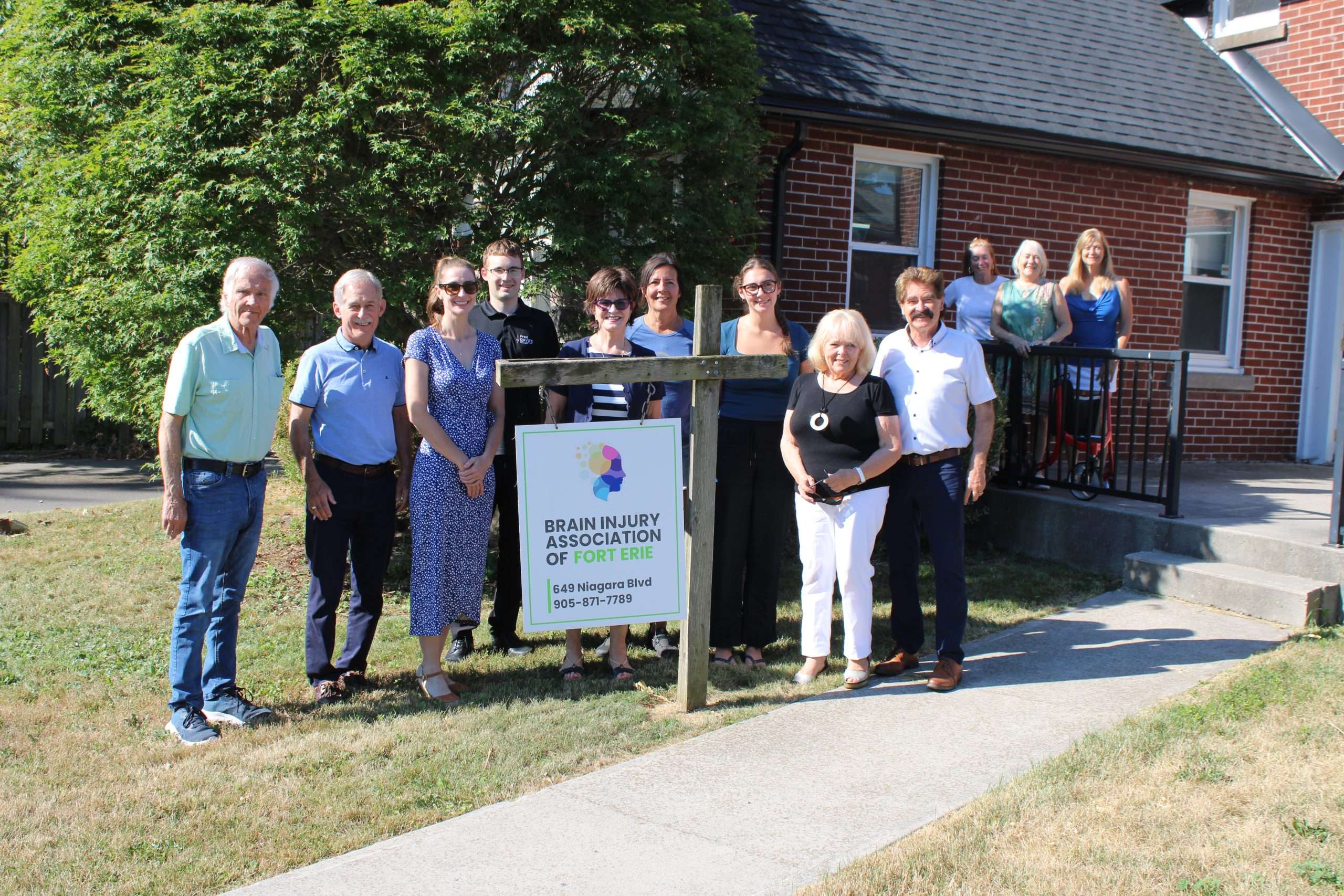 Credit: Andrew Hawlitzky | Fort Erie Radio
“Every time there was funding, it’s something else. Do we have a leaky roof? Is there something in the basement that needs to be done? Can we do something to further the clients?” said Wofenberg.
Jackie Denham founded the organization in 1987 with her longtime friend Shirley Athel after brain injury affected both of their families. Athel died recently.
“She didn’t get to see that we were financially stable,” said Denham, the association’s president. “We were fighting for nickels and dimes all the time.”
Denham said the two women felt they had no choice when the work began.
“When it’s strangers, you can walk away. When it’s yours, there’s no choice. You’ve got to jump in and do what you can do,” she said.
The charity operates on about $100,000 a year and serves people living with acquired brain injuries across Fort Erie and the Niagara region, longtime board member Betty Talbot told Fort Erie Radio. Revenue from Delta Bingo and Gaming covers roughly 80 per cent of that budget. Local fundraising covers the rest.
“We wouldn’t be here if it wasn’t for the bingo money,” said Talbot.
The new music program offers drumming, singing, rhythm exercises and adaptive instruments, while the expanded art program includes painting, sculpture, mixed media and collaborative murals. The association says both serve participants at every stage of recovery and can strengthen memory, communication, coordination and social connection.
A separate one-year foundation grant will launch a weekly drop-in group in September. The second Wednesday of each month will be for caregivers and the third for spouses of people who need care. The sessions will offer coffee and conversation without a therapist.
“When you get an acquired brain injury, your life changes instantly on the spot,” said Wofenberg. “Your resources are there usually for the first year, and then they start to peter off.”
Wayne Gates, MPP for Niagara Falls, told the gathering he plans to introduce a private member’s bill in November that would pay eligible Ontario caregivers–a group he numbered at 3.3 million provincewide–up to $1,000 a month. He pointed to Nova Scotia, where a similar program pays caregivers $400 a month.
“How do you choose between your loved ones and your job?” said Gates. “Some people are already living in poverty trying to get by with the jobs they have.”
Denham said the financial hit comes fast for families, since a relative on Ontario Disability Support Program payments only receives about $800 a month.
“When you have someone that needs care all the time, there goes your income. You have to quit work,” she said.
The drop-in sessions begin in September. Gates plans to table his bill after the legislature returns October 27.
Fort Erie hires Clark Bernat as manager of culture and museums

Seven electric vehicle charging stations to be installed in Fort Erie
Redekop wins Two Row Alliance Award for work with Indigenous community
About The Author

Andrew Hawlitzky
Andrew is a Niagara community journalist who has covered everything from local politics to annual festivals and breaking news. He works to make local news a platform where community voices lead the conversation. "If you don't like the news, go out and make some!"

Stay Informed