
‘The civil rights movement started in Fort Erie,’ says Black history expert
February 8, 2025 at 10:44 PM


February is Black History month in multiple countries, but Fort Erie is a prolific place when it comes to people finding a better life, one removed from slavery.
Along the Niagara Parkway, there are a number of spots where freedom seekers began a new chapter by accessing the Underground Railroad.
Niagara Parks, the agency that maintains those lands beginning at Old Fort Erie and all the way to Niagara-on-the-Lake, has highlighted several locations in Fort Erie considered vital pieces of Niagara’s Black history.
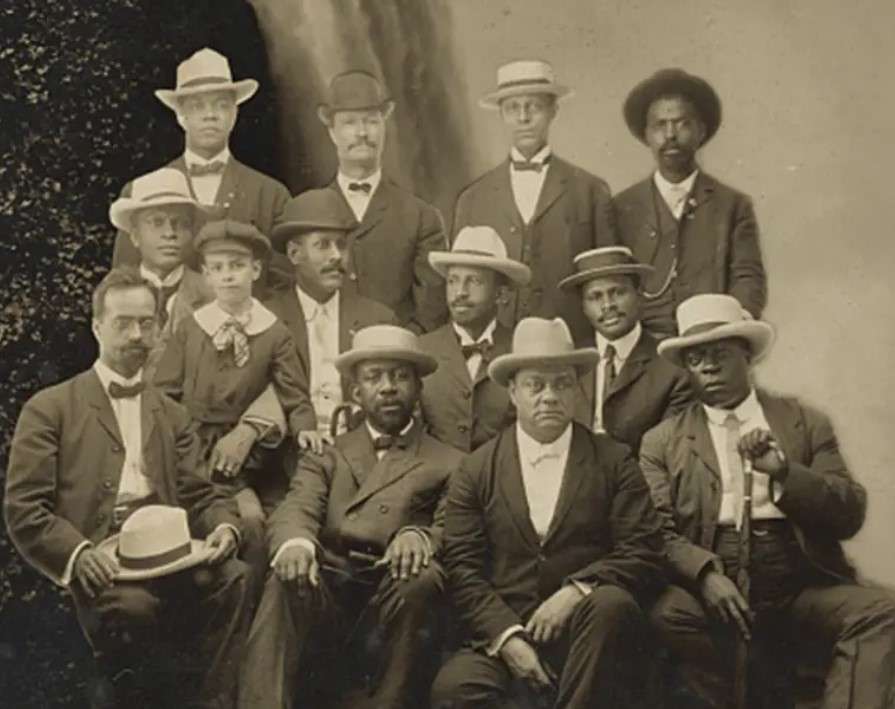 Founders of the Niagara Movement, who met at Erie Beach 120 years ago and led to the eventual formation of the NAACP. Credit: Niagara Parks
One of those spots is the former Erie Beach Hotel site, in the area of what is currently known to locals at Waverly Park.
The 120-year anniversary of a crucial occasion in the rights of Black people is taking place later this year, something that occurred on those waterfront lands.
Lezlie Harper, who grew up in Fort Erie and operates Niagara Bound Tours, an educational experience about the peninsula’s Black history, said the meeting that occurred at that site was essentially the formation of the National Association for the Advancement of Colored People (NAACP), originally called the Niagara Movement.
In July 1905, W.E.B. Du Bois and close to 30 men from 14 states met at the hotel to write the group’s founding principles. The organization aimed to further African Americans’ fight for civil rights by building upon the progress gained since the American Emancipation Proclamation of 1863.
“The beginning of the civil rights movement started in Fort Erie,” Harper said in an interview with Fort Erie Radio, adding that the meeting was a “safe place” for those involved.
She hopes a celebration can be planned with participation from both sides of the border later this year.
Harper said Fort Erie has always been a place that’s welcoming of people starting new lives from other places.
She grew up on Lavinia Street, named after her great-grandmother Lavinia Taylor-Chandler, part of a neighbourhood that over time saw many people emigrate from Europe.
For many years, Bertie Hall (also known as the Mahoney Dolls’ House Gallery), was thought to be a safehouse along the Underground Railroad, but that theory was debunked close to five years ago and resulted in a plaque being removed from the site by Niagara Parks.
In the 1840s and 1850s, Fort Erie was a transit point for the Underground Railroad moving runaway slaves across the border to freedom in Canada.
Slaves and their “conductors” would take the short boat ride from the American side, to land at some secluded location, explains Niagara Parks on its website.
Niagara’s Freedom Trail honours the thousands of African American slaves that found freedom in Canada.
The Underground Railroad aided an estimated 40,000 African American slaves in their escape to the “more tolerant northern American states, or ultimately to the freedom of Canada,” says Niagara Parks.
Fort Erie became a popular crossing for freedom seekers because of its proximity to Buffalo.
Ferry operators helped fugitive slaves and used a secret system of codes and symbols to distinguish bona fide passengers from potential spies, according to Niagara Parks.
The Bertie Street Ferry landing was the longest operating ferry dock used by freedom seekers and the site where thousands of fugitive slaves first set foot in Canada.
“Freedom Park was established at the site to honour the thousands of African Americans who found sanctuary and experienced freedom for the first time in Canada,” says the parks commission.
Late last year, an event took place at this site called Josiah’s Journey, a celebration of Josiah Jenson.
On October 28, 1830, he landed in Fort Erie after escaping 41 years as a slave in the United States.
He was born into slavery in Maryland, travelled to Kentucky, and then ended up in Sandusky, OH, where he was welcomed by Indigenous people who accommodated him and his family, which included two children, before boarding a ship that would take him to Buffalo, N.Y., then landing at the Freedom Park site in Fort Erie.
Fort Erie once had an area known as ‘Little Africa,’ a popular settlement for freedom seekers arriving in Canada during the 1840s.
Many of the inhabitants were employed cutting wood for fuel used by the nearby railways that ran through the settlement and steamboats that plied the Niagara River. The population of Little Africa grew to approximately 200 and declined in 1880 because of decreasing demand for wood in the area, according to information authored by Niagara Parks.
A nearby graveyard remains as a legacy to this once thriving community of industrious Black Canadians, explains the parks commission.
GFESS student wins prestigious scholarship for transforming school food services
Waverly Beach remains unsafe for swimming due to presence of algae
‘Cows Come Home’ earns four Canadian Screen Award nominations
About The Author

Kris Dubé
Kris is a veteran journalist who has worked in Niagara for close to 20 years. He is also a lifelong resident of Fort Erie, a place he plans to call home and raise his family for many more years.

Stay Informed