
Redekop defies province on strong chair powers, splits Niagara mayors
May 2, 2026 at 9:07 PM


Mayor Wayne Redekop came to regional council April 30 with a warning, and left with Niagara Region on record against a provincial plan he says would hand local power to an appointed chair.
Redekop’s resolution passed 18-9 asking Premier Doug Ford’s government to stop Bill 100 from giving an unelected Niagara regional chair veto power over elected mayors, in a vote that split mayors over whether the province is weakening local democracy or fixing a slow regional council.
Redekop called Bill 100–otherwise known as the Better Regional Governance Act, 2026–a direct challenge to elected municipal government that would replace Niagara’s 32-member regional council with the 12 local mayors and one appointed chair.
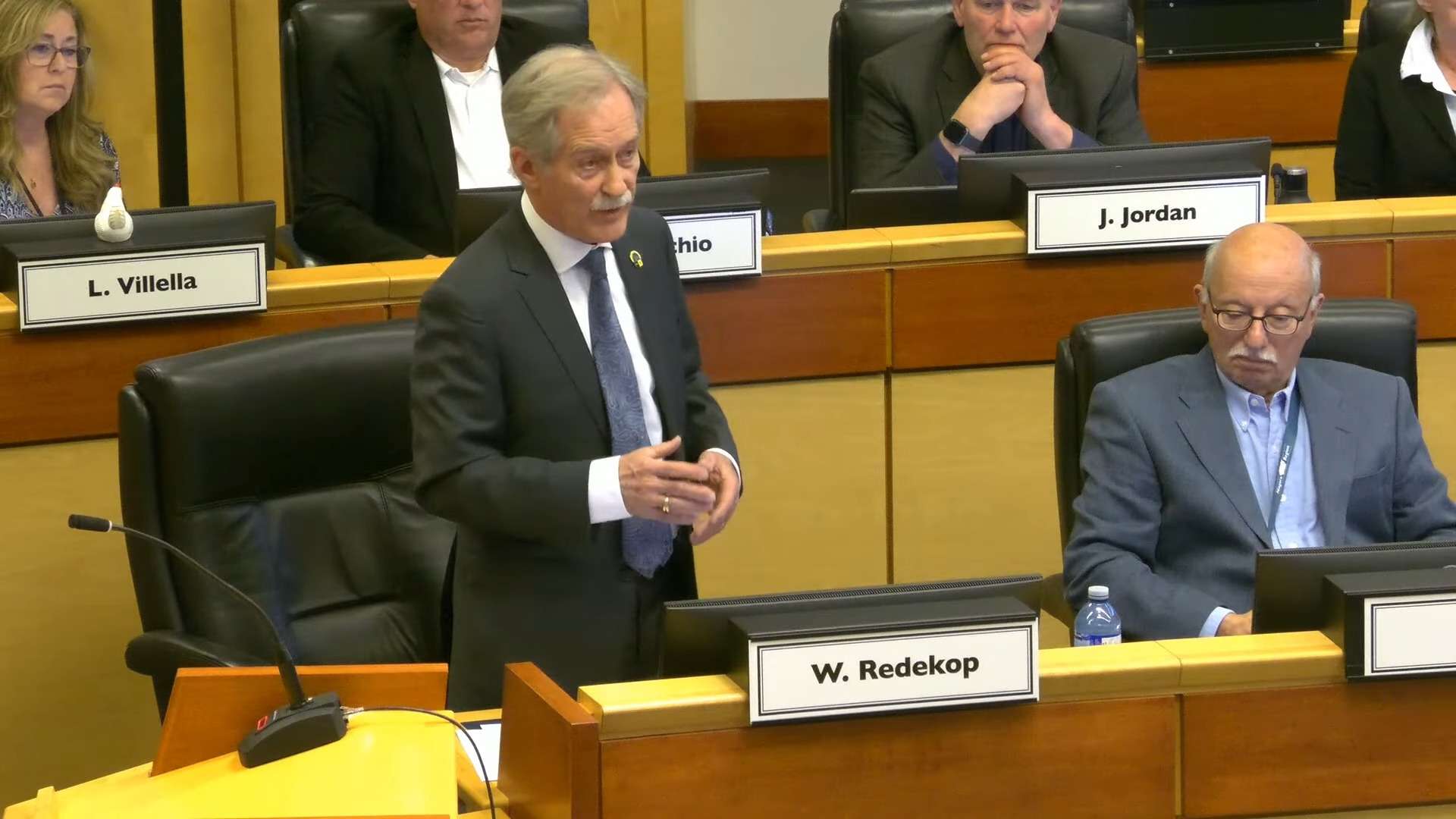 Mayor Wayne Redekop speaking at Niagara’s regional council meeting on April 30. Credit: Niagara Region | YouTube
“I wouldn’t have thought when I started my political career that I would ever be involved in a debate about whether or not local representatives of local government would be appointed as opposed to elected by the residents,” said Redekop.
If the bill were to pass, Fort Erie would lose its dedicated regional councillor seat–currently held by Tom Insinna–and the mayor would become the town’s lone voice at regional council.
Redekop told council the legislation leaves too much power outside the bill itself.
He said the province could decide the chair’s authority later through regulations, beyond the fuller public debate attached to legislation.
“The legislation also doesn’t spell out that the regional chair will have any extraordinary powers, but leaves that to regulations and we don’t know what the regulations will say,” said Redekop.
Redekop’s resolution asks the province to remove any veto or extraordinary powers from appointed regional chairs and county wardens. It also asks Ontario to prefer elected regional leadership and ensure any weighted voting system gives fair representation to all municipalities.
Redekop also warned that appointed chairs would inevitably answer to the province in a way elected municipal leaders do not. He told council that major governance changes require evidence, financial analysis and public consultation.
“We’re talking about the potential for eight individuals representing large parts of Ontario and large populations being appointed by a government,” said Redekop.
The fight began at Fort Erie town council April 13, when councillors unanimously backed Redekop’s resolution.
Redekop warned that a new regional model could let the two largest cities and an appointed chair override the remaining elected mayors on decisions that affect smaller communities.
The regional vote did not fall cleanly along that line. Six mayors backed the Fort Erie position: Redekop, Wainfleet Mayor Brian Grant, Grimsby Mayor Jeff Jordan, Pelham Mayor Marv Junkin, Port Colborne Mayor Bill Steele and Thorold Mayor Terry Ugulini.
Five mayors opposed it: Welland Mayor Frank Campion, Niagara Falls Mayor Jim Diodati, Lincoln Mayor Sandra Easton, St. Catharines Mayor Mat Siscoe and Niagara-on-the-Lake Lord Mayor Gary Zalepa.
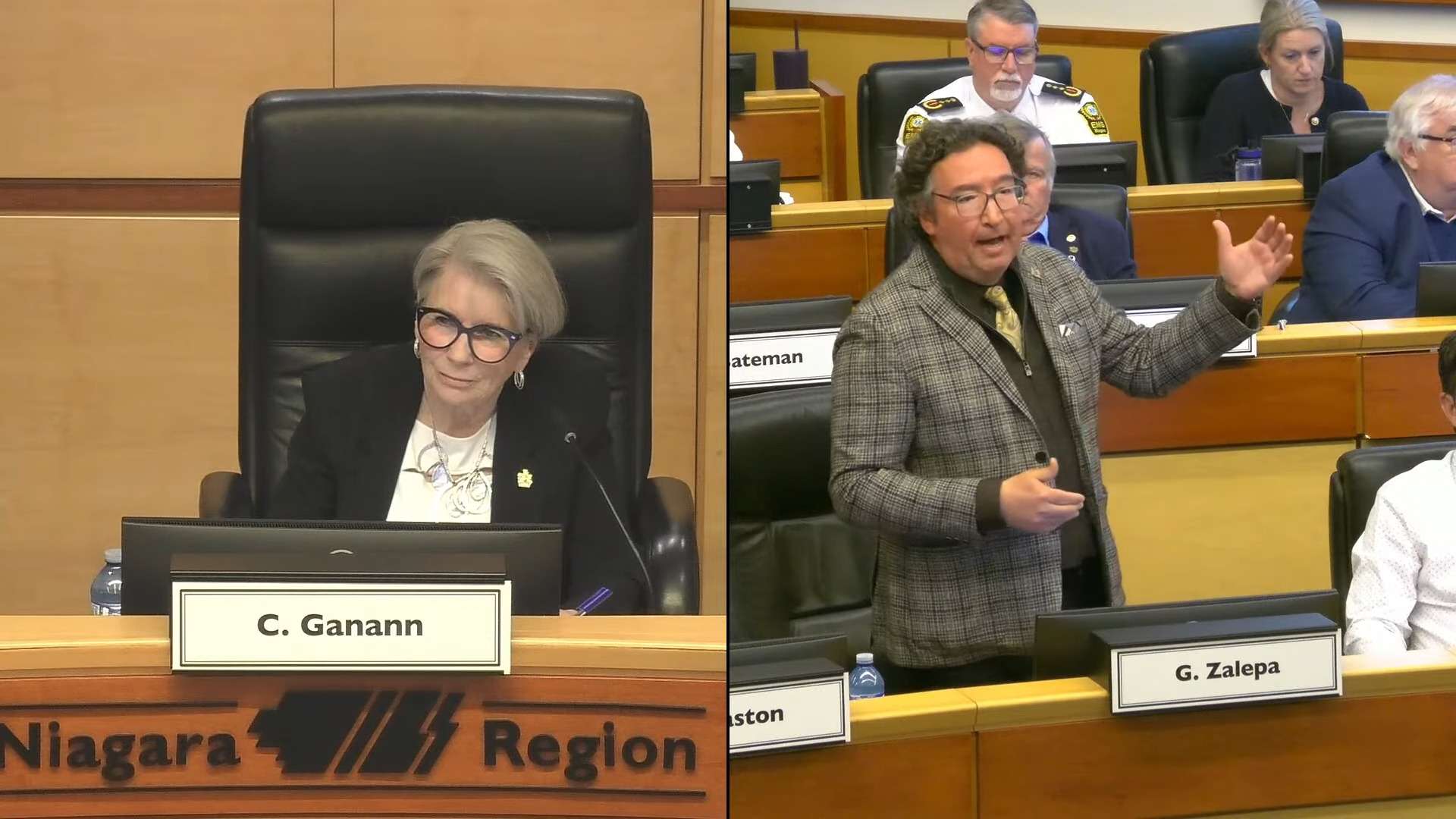 Interim Regional Chair Cheryl Ganann and Niagara-on-the-Lake Lord Mayor Gary Zalepa, who argued against Fort Erie Mayor Wayne Redekop’s resolution, at Niagara Region council on April 30. Credit: Niagara Region | YouTube
Zalepa argued the region was being asked to endorse a Fort Erie letter that councillors could not amend. He said governance reform is needed, but council needed a better process to deal with the province’s proposal.
“I just don’t appreciate the process to bring a letter and then all of a sudden it’s support,” said Zalepa.
A move to send the issue to committee failed 15-12. That forced councillors into a direct vote on whether to support Fort Erie’s letter.
Welland Mayor Frank Campion defended some strong executive powers. He argued stronger authority over budgets and senior staff can make local government more stable.
Niagara-on-the-Lake Councillor Andrea Kaiser supported Redekop’s position. She said the public has not grasped the scale of the change before the province.
“I have been shocked by the fact that this is not in the headlines and that people are not outraged,” said Kaiser.
The regional chair’s seat has been vacant since Bob Gale resigned March 11. Gale had been appointed by Ford in December 2025.
If passed, the Niagara changes would take effect before the October municipal election. Municipal election nominations opened May 1.

Fort Erie council defers decision on rural road speed limit changes
Fort Erie to look at lodging house licensing bylaw

Staff memo presents options for expediting development approvals
About The Author

Andrew Hawlitzky
Andrew is a Niagara community journalist who has covered everything from local politics to annual festivals and breaking news. He works to make local news a platform where community voices lead the conversation. "If you don't like the news, go out and make some!"

Stay Informed