
Little Red Coffee offers four-part AI ‘vibe coding’ series
March 1, 2026 at 5:59 AM


As a business owner, Les Lakewood has been using AI to improve efficiency at his Queen Street coffee shop, and is now sharing what he’s learned with the community.
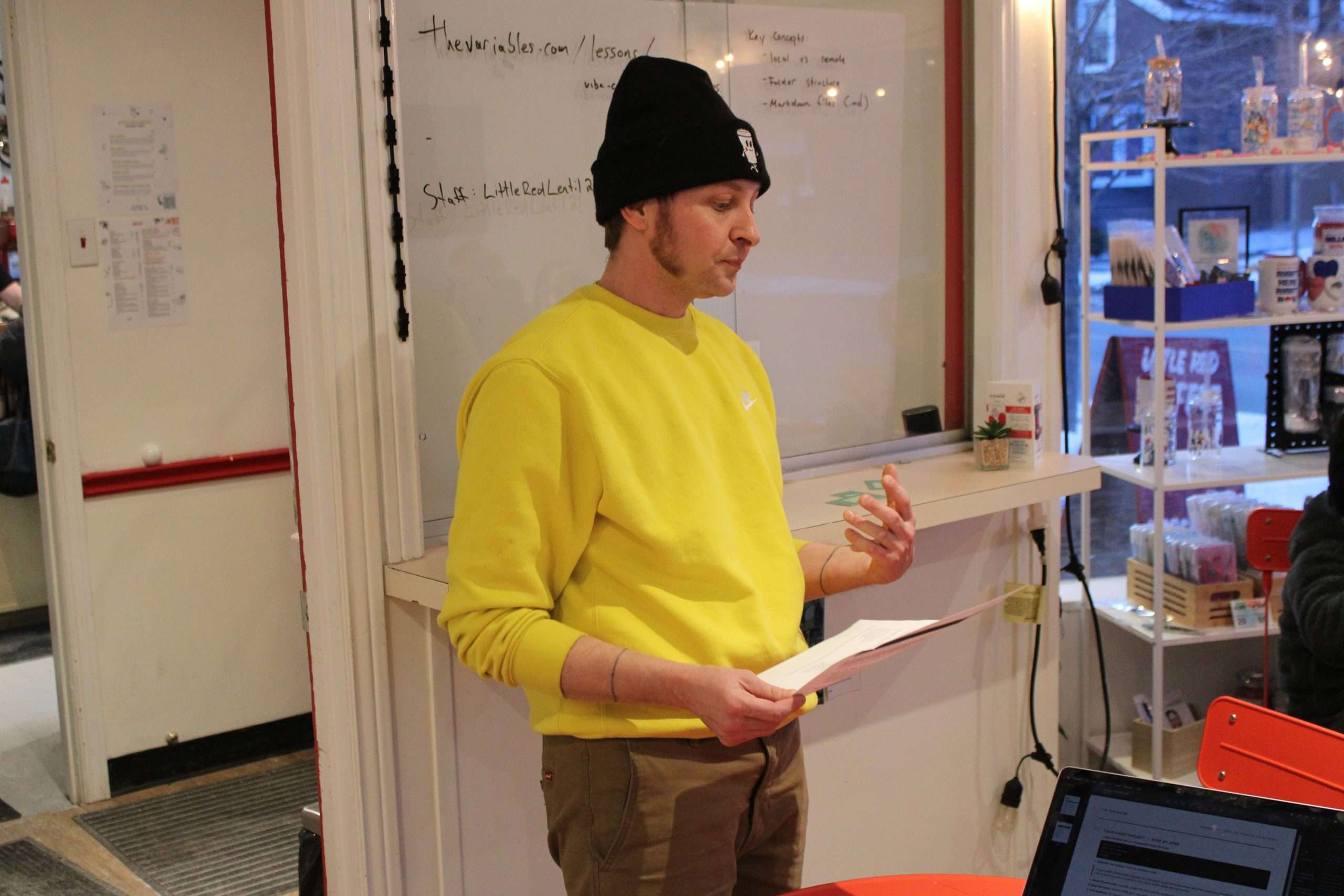
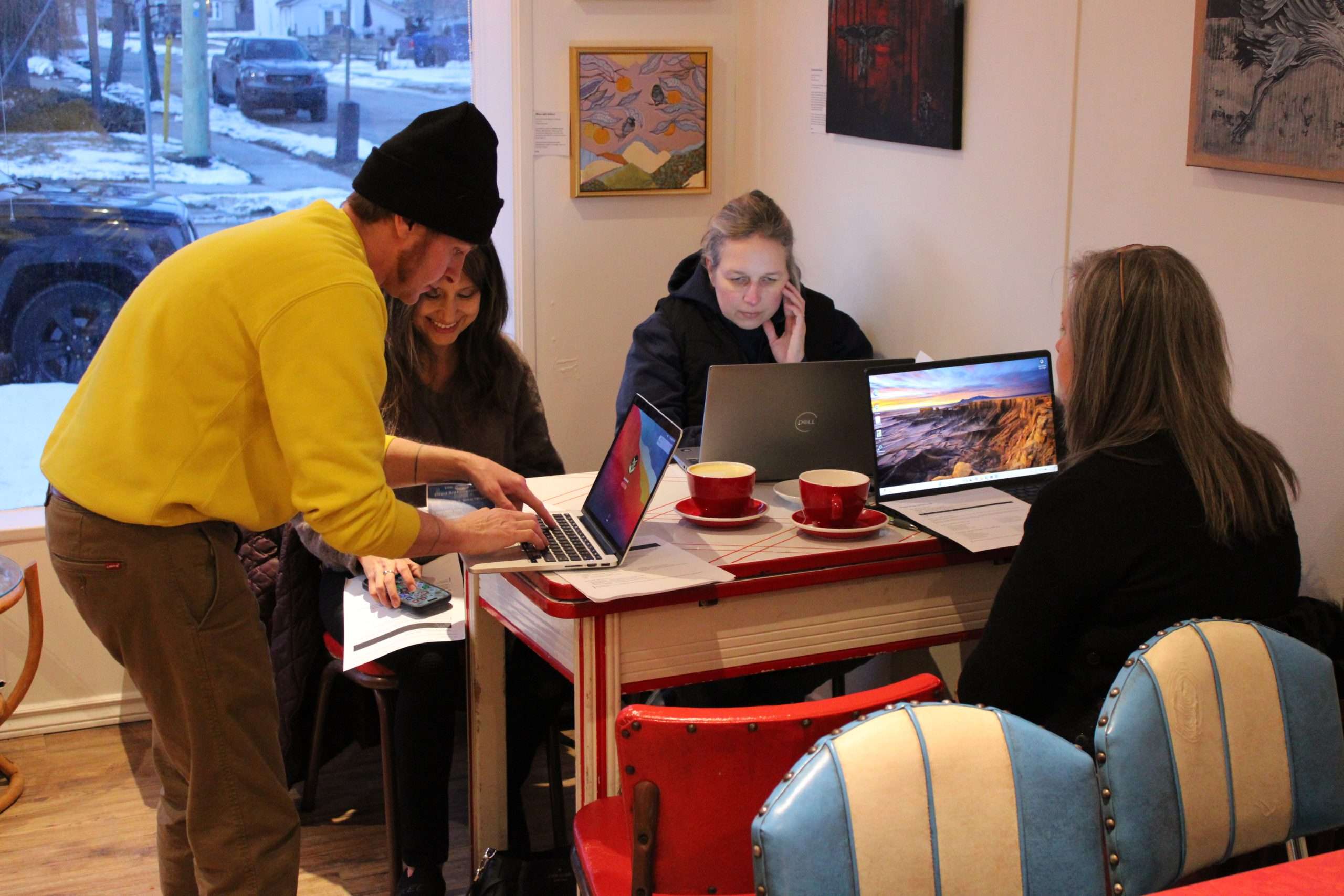
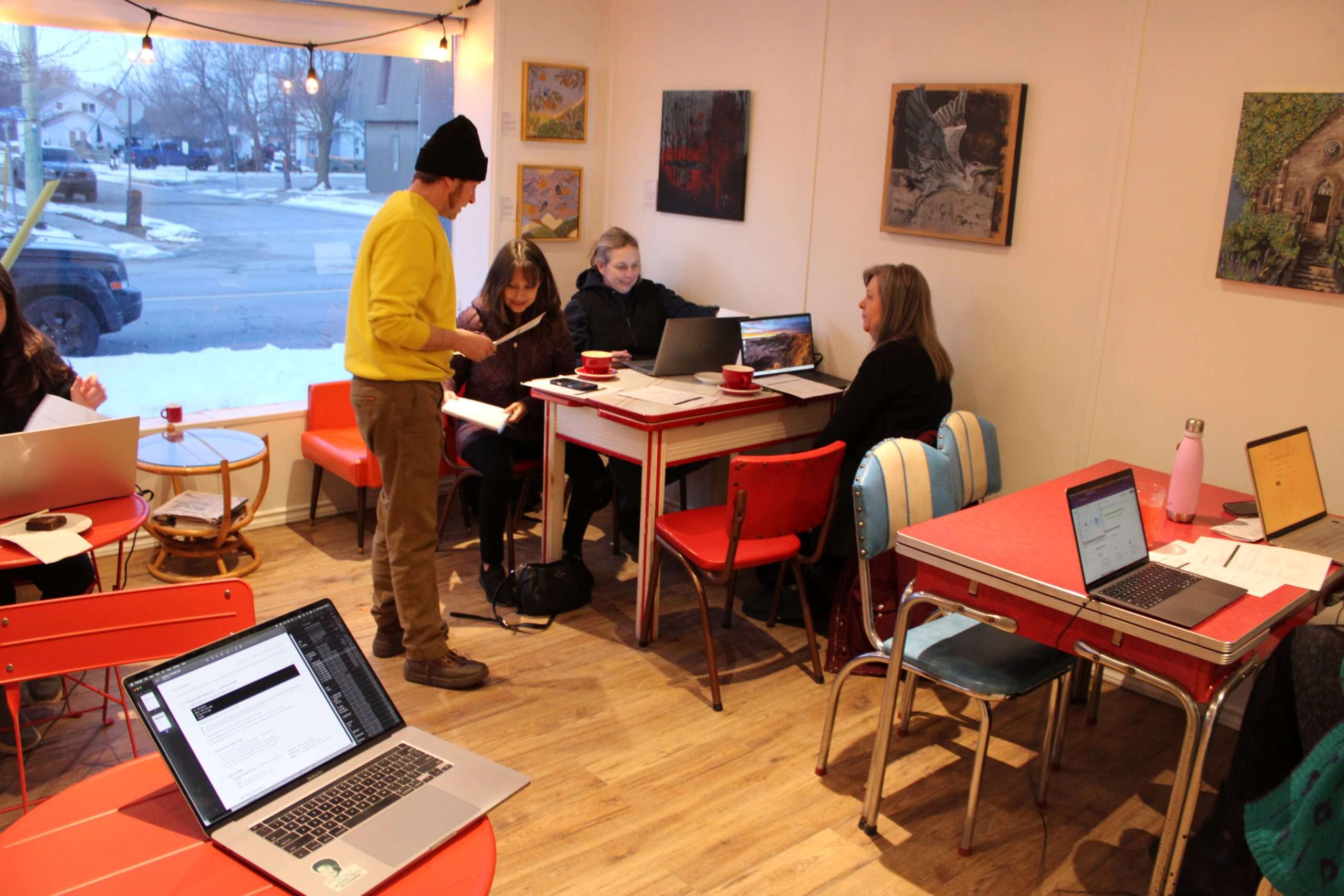
On February 26, Lakewood began a lesson on “vibe coding,” teaching a small group at Little Red Coffee how to build simple software on their own computers using an AI software called Anthropic’s Claude Code.
“AI is more than just creating slop posts for Instagram,” Lakewood told Fort Erie Radio. “People should not be wasting the resources that come with this technology.”
 Credit: Andrew Hawlitzky | Fort Erie Radio
Lakewood, a 25-year software developer, presented the four-part workshop as both a way for small businesses to cut software costs and a warning about the risks associated with modern AI systems.
“Over that time, I have seen software architecture become complicated, and it made me want to leave,” he said. “I can’t imagine anybody else trying to get started.”
Lakewood began the series after experimenting with Claude Code in January, describing it as an “agentic coder” that generates working programs, such as spreadsheets, directly on a user’s computer from natural-language prompts.
Unlike a standard chatbot like ChatGPT which drafts text, Claude Code writes and organizes code files that form a functioning application.
Lakewood described discovering Claude Code in January and testing it on his own business operations.
“I’ve made a wonderful operations dashboard out of all of my spreadsheets and Word documents,” said Lakewood. “I’ve made a financial dashboard because I myself need to learn better what those financial numbers mean.”
The first lesson focused on building a simple recipe management tool and on basic organization practices such as folder structure. Throughout the series, Lakewood will guide participants through app deployment and basic security concepts.
Lakewood argued similar tools could allow small organizations to cancel paid software services and build custom systems in-house.
“Software as a service is going out of date,” he said. “We’re not going to have Salesforce anymore. People can just say, ‘Create me a personal Salesforce tool that I can use on my computer.’ Done.”
 Credit: Andrew Hawlitzky | Fort Erie Radio
As examples, he cited the possibility of replacing a restaurant reservation platform with a self-built booking system connected directly to a website button, or building a custom alternative to an FTD flower subscription for a local florist.
One participant who attended the first class, Alex Meiklejohn, works in sales, selling AI software.
“I want to understand how AI is changing the foundation of what builds all software,” said Meiklejohn.
The series reflects a broader shift in how artificial intelligence tools are moving from corporate IT departments into local storefronts, colleges and sales teams, even as debate intensifies over data privacy, military use and regulation.
For small business owners in Niagara, the promise of replacing monthly software subscriptions with custom-built tools comes alongside questions about where sensitive data goes and who controls the technology.
“I know Les very well and I trust their expertise, so that’s partly why I’m here,” said Meiklejohn.
 Credit: Andrew Hawlitzky | Fort Erie Radio
Lakewood also devoted part of the workshop to warnings about data security and the industry’s broader direction. He selected Claude Code, produced by Anthropic, and told participants he had previously viewed the company as more cautious than competitors about AI safeguards.
But on the same day as the first class, Anthropic amended its responsible-scaling policy, stating it would delay development only if it believed it had a significant lead over competitors. The company has said the change is unrelated to a dispute with the U.S. Department of Defense over military uses of its technology.
Lakewood referred to those developments while explaining his decision to proceed with the tool despite concerns.
“As of today, I feel like, great, there’s no safe tool, but we’re still going to learn it because this is the thing that’s going to change the way that all systems are run,” he said.
He urged participants to think carefully about what information they enter into AI systems, particularly personal and business data, describing the future of AI as uncertain and potentially risky.
“It is a scary future, and people should really safeguard themselves against the data that they are feeding into this type of machine,” he said.
The four-part series will continue at the Queen Street shop, with future sessions covering security practices and app deployment. Lakewood noted that details and registration information are available on the Little Red Coffee’s website.
R2G Construction collects donations through social media challenge

Community and business leaders honoured at Chamber of Commerce awards night

Fort Erie metal processing company fined $220,000 for workplace safety violation
About The Author

Andrew Hawlitzky
Andrew is a Niagara community journalist who has covered everything from local politics to annual festivals and breaking news. He works to make local news a platform where community voices lead the conversation. "If you don't like the news, go out and make some!"

Stay Informed