
Ice boom removal set to begin April 6 after weather delays
April 2, 2026 at 3:56 AM


Crews will begin pulling the Lake Erie-Niagara River ice boom out of the water on April 6, days behind its typical April 1 deadline.
Satellite imagery taken March 30 showed ice coverage in the eastern basin of Lake Erie had fallen below 650 square kilometres, the threshold required to authorize removal.
That finding gave the International Niagara Board of Control grounds to approve the work. But a significant amount of ice remained in the lower Niagara River, and the coming days brought forecasts of rain and high winds that would have put crews at risk.
Removal will proceed as ice conditions and safe working conditions allow, in accordance with the International Joint Commission Order of Approval that governs the boom’s operation.
This winter’s ice boom season was already complicated before spring arrived.
Installation in late December was delayed when winds gusting up to 110 km/h along the Lake Erie shoreline on December 29 created unsafe conditions for New York Power Authority crews trying to connect the final sections of the boom’s pontoon strings.
Large sheets of ice moved down the Niagara River along Fort Erie’s waterfront in early January before installation was complete.
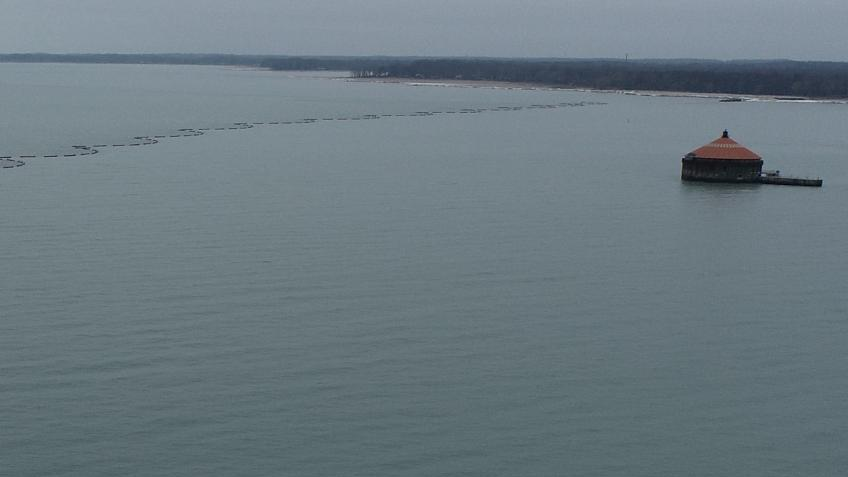 The Lake Erie-Niagara River ice boom has been installed every winter since 1964. Credit: International Niagara Board of Control
The boom is a floating steel structure installed each winter near the outlet of Lake Erie that has gone in every year since 1964.
Its purpose is to help form a stable shelf of ice at the lake’s outlet, which limits large ice runs from moving down the Niagara River. Without that shelf, ice traveling the river raises the risk of jams that can pile onto shorelines and restrict water flow to hydroelectric turbines.
The boom is owned jointly by Ontario Power Generation and the New York Power Authority, which is responsible for its installation, operation and removal.
The April 6 start date puts the removal well within the range of outcomes seen over the boom’s six-decade history. The latest removal on record came May 3, 1971. The earliest was February 28, 2012.
Removal is expected to take several days once crews begin, subject to conditions on the water.

TOP 25 IN ’25 | The 25 most clicked Fort Erie news headlines this year

Public tennis courts on Central Avenue open for the summer

Ontario approves Fort Erie 25-year official plan after Bill 100 passes
About The Author

Andrew Hawlitzky
Andrew is a Niagara community journalist who has covered everything from local politics to annual festivals and breaking news. He works to make local news a platform where community voices lead the conversation. "If you don't like the news, go out and make some!"

Stay Informed