

Fort Erie gathers in orange for Truth and Reconciliation Day
October 2, 2025 at 3:33 AM



A sea of orange filled the Fort Erie Native Friendship Centre on Tuesday as residents honoured Canada’s National Day for Truth and Reconciliation.
The annual event brings residents together for food, music and conversation in honour of Indigenous survivors, presenting the opportunity to learn about the legacy of residential schools and reflect on reconciliation.
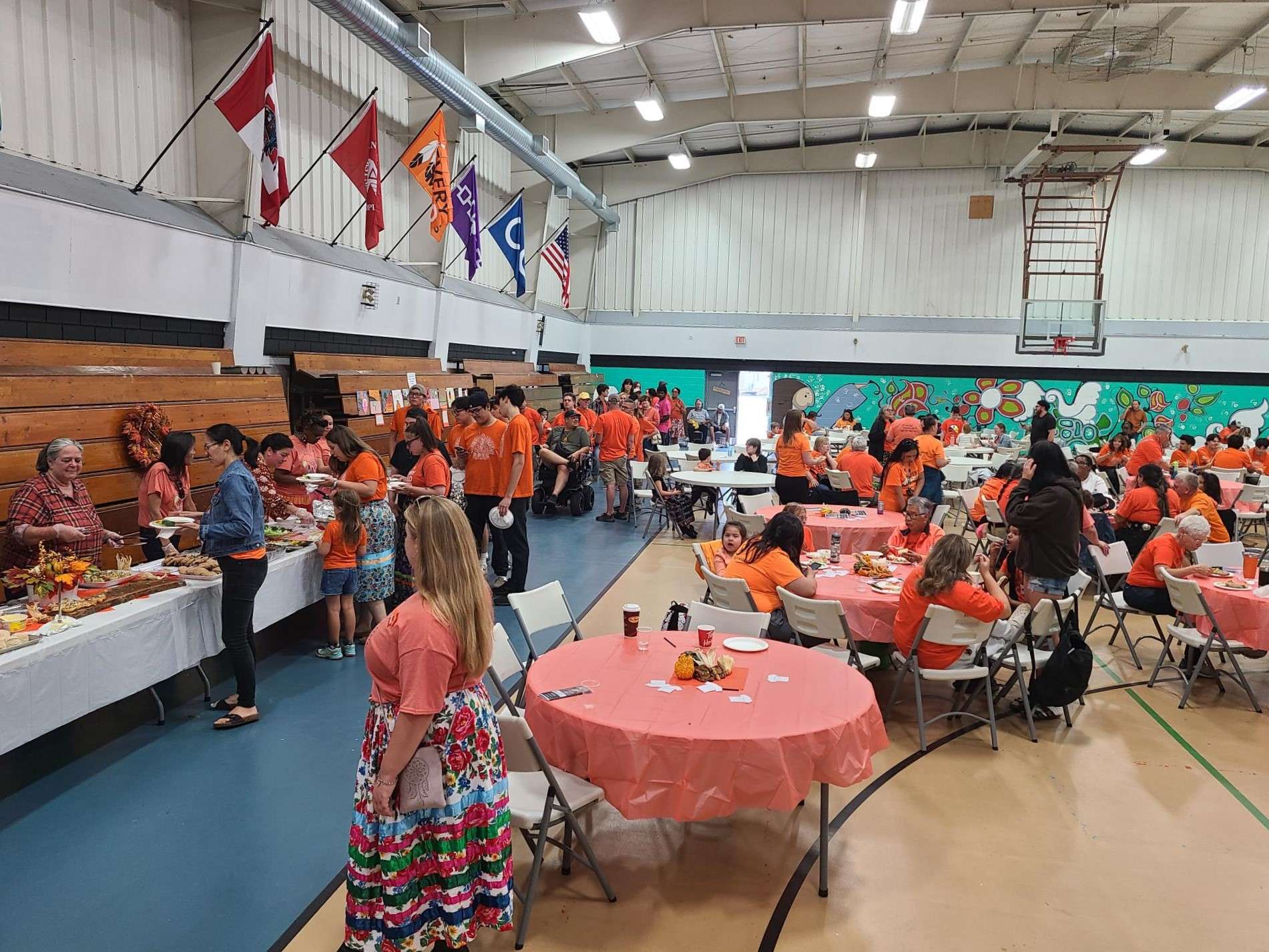 A long food table with traditional dishes draws a steady line of community members during the National Day for Truth and Reconciliation at the Fort Erie Native Friendship Centre. Credit: Andrew Hawlitzky | Fort Erie Radio
“These are Indigenous peoples’ truths and the opportunity for our allies to be part of reconciliation,” said Shannon Cotter, youth worker and cultural lead at the centre.
The day began at 6 a.m. with a sunrise ceremony and later included guest speakers, a traditional feast and Haudenosaunee social dancing with a big drum.
“So it’s a little bit of education, but also a chance to sit and reflect for ourselves as well,” Cotter told Fort Erie Radio at the event.
She said the turnout showed how much has changed since the time when Indigenous people were barred from gathering in groups larger than five. She also noted the importance of reclaiming space as a community through conversation and sharing.
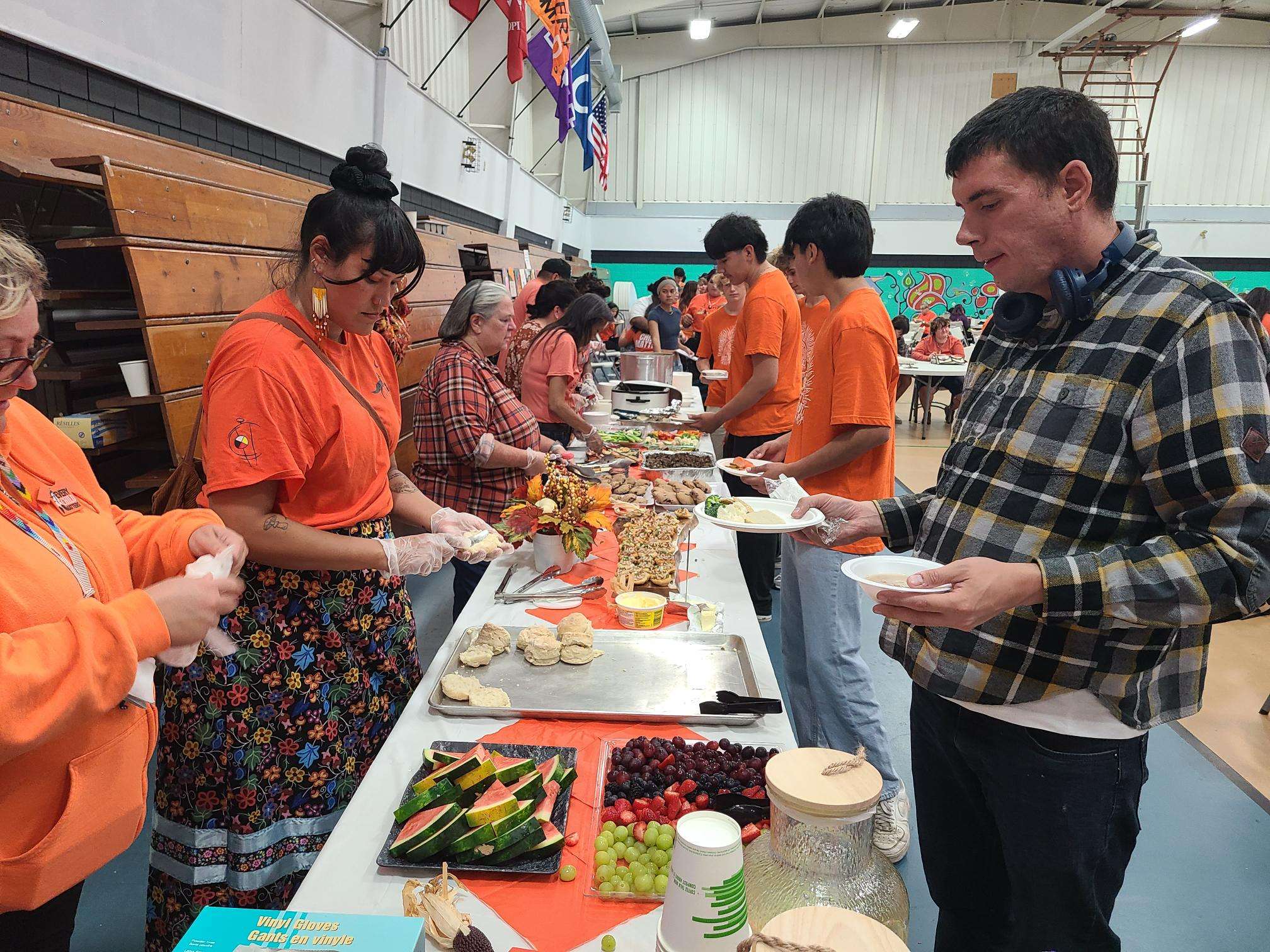 Volunteers in orange shirts serve traditional Indigenous dishes to attendees at the Fort Erie Native Friendship Centre. Credit: Andrew Hawlitzky | Fort Erie Radio
“If I reflect back a few years ago when the orange shirt campaign first became big, you’d see just a few. Now I see it everywhere. It really takes that moment to make you feel good about what’s happening,” said Cotter.
Keynote speaker Sherri Vansickle, a Brock University professor from the Six Nations of the Grand River territory, told Fort Erie Radio at the gathering that reconciliation must start with hearing truths, even when they are uncomfortable. She said Indigenous people cannot be expected to carry the burden alone.
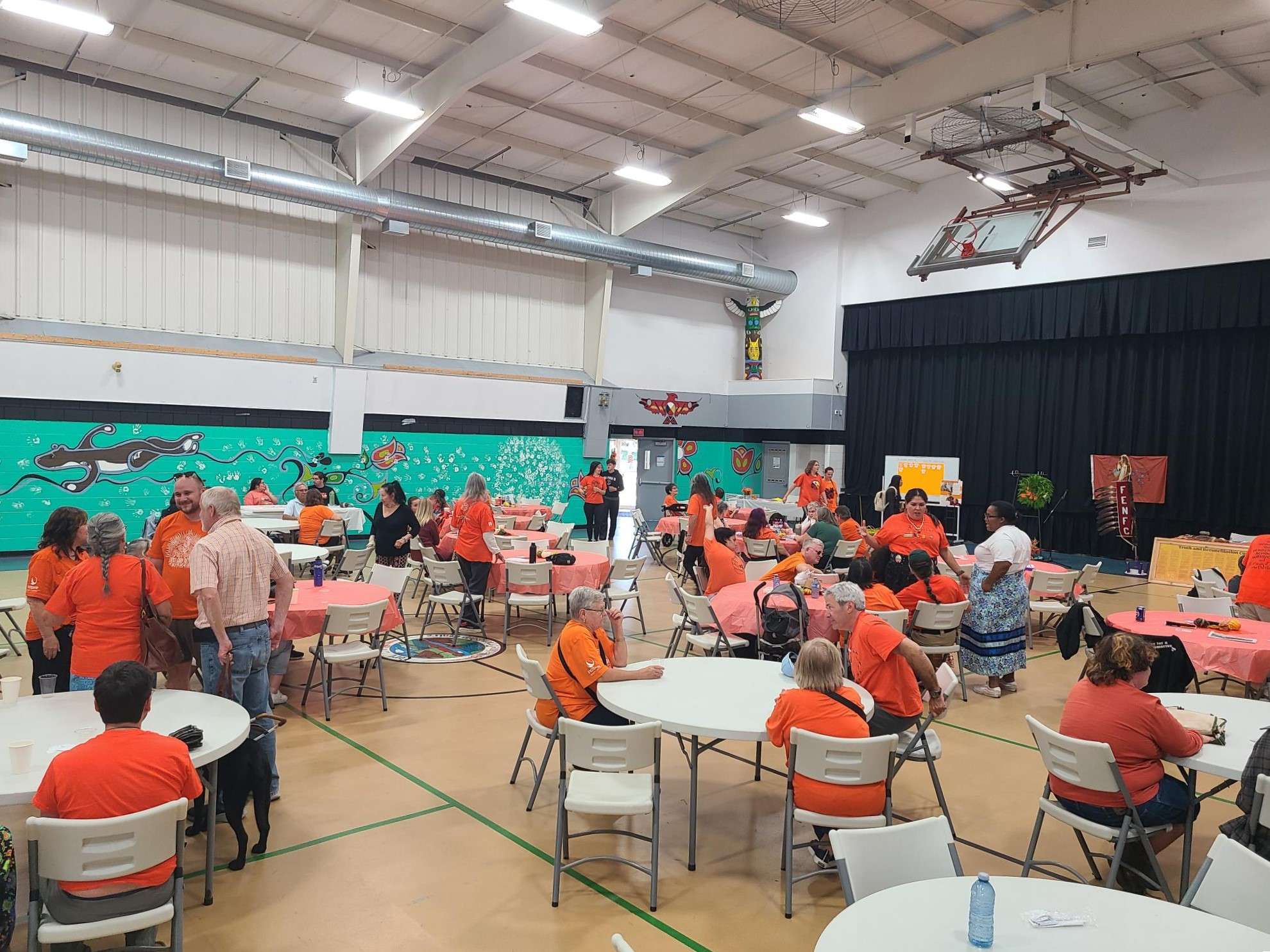 People in orange shirts gather inside the Fort Erie Native Friendship Centre gym. Credit: Andrew Hawlitzky | Fort Erie Radio
“We can’t have reconciliation until we have truth. My responsibility as an Indigenous person is to tell the truth, and sometimes it’s a hard truth that people don’t want to hear,” she said. “But it’s crucial to tell it, because Indigenous people can’t do all the heavy lifting alone.”
Vansickle described the devastating scale of the residential school system, comparing it to a century-long absence of children in major Canadian cities. She said that legacy explains the deep trauma that remains.
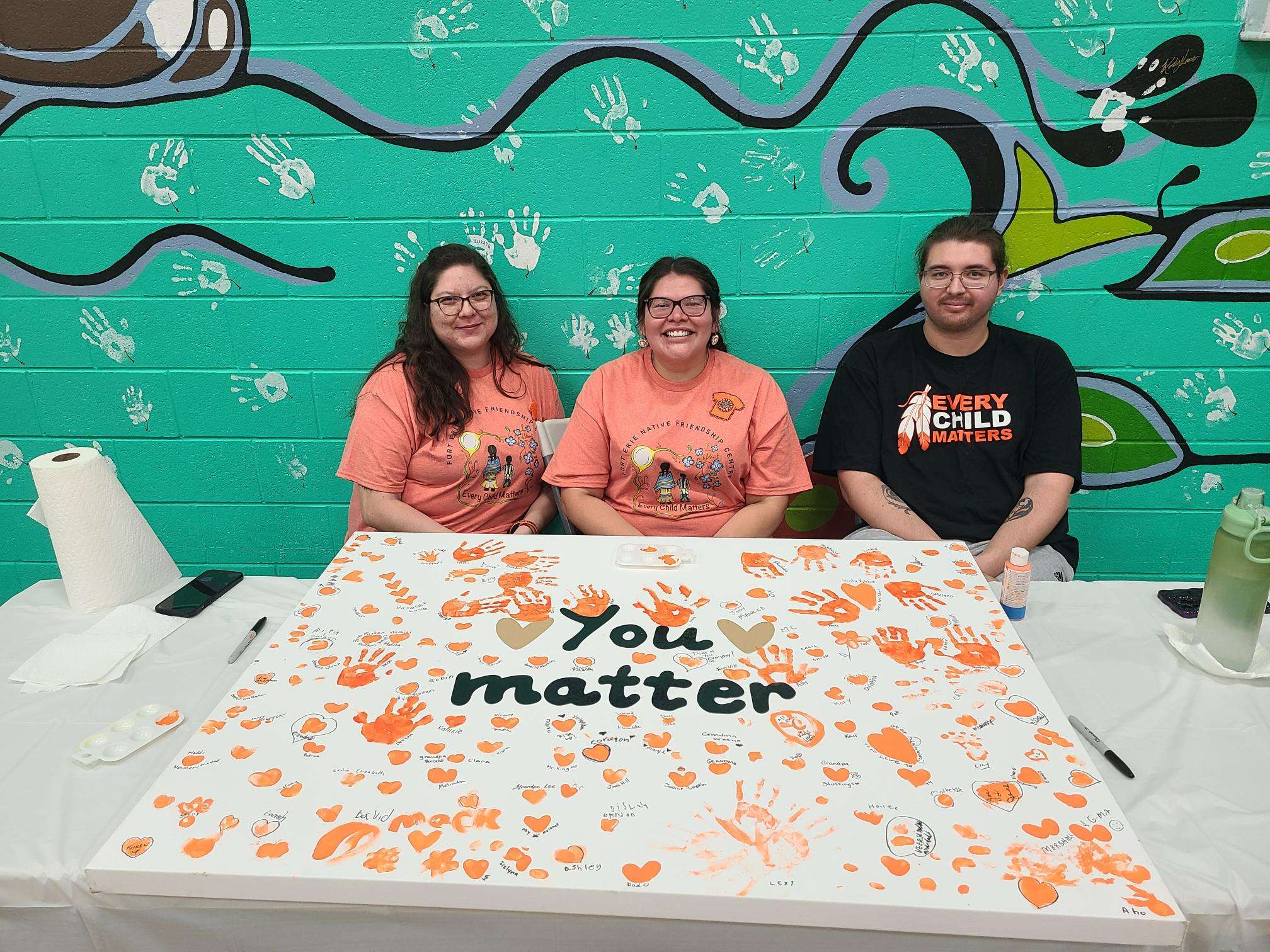 A “You Matter” handprint board at the Fort Erie Native Friendship Centre. Credit: Andrew Hawlitzky | Fort Erie Radio
She also explained that Indigenous people already know how to move forward through the Truth and Reconciliation Commission’s 94 Calls to Action, very few of which she says have been accomplished by the federal government.
She added that the role of non-Indigenous allies is not to lead but to stand beside communities and use their access to decision-makers.
“We do need allies, because sometimes they’re the only ones with access to certain rooms and certain people. Those are the ears we need listening,” said Vansickle.
Stevensville dog park officially opens Monday with ribbon cutting
Hangover Hustle an excuse on New Year’s Day to ‘get together and be silly’
Veterans memorial crosswalk opened in downtown Ridgeway
About The Author

Andrew Hawlitzky
Andrew is a Niagara community journalist who has covered everything from local politics to annual festivals and breaking news. He works to make local news a platform where community voices lead the conversation. "If you don't like the news, go out and make some!"

Stay Informed