
Crystal Beach mother’s story highlights food insecurity across town
April 13, 2026 at 3:55 AM


A Crystal Beach mother described her family’s experience living three years without stable housing during a tearful public meeting at Crystal Ridge Community Church on Saturday, where residents and community leaders discussed solutions to rising food insecurity across Greater Fort Erie.
The open house, hosted by Advancing Crystal Beach, brought together food banks and charitable non-profits across the town, along with Niagara Falls MPP Wayne Gates and Ward 4 Councillor Joan Christensen to deal with an alarming datapoint: approximately 8,000 people rely on food banks in Fort Erie, or every one in every four residents.
Cathleen Carson, a Crystal Beach resident and single mother, told the room how she lost her home after her husband’s death and moved between tents, campers and couches before securing a co-op unit in town.
“I just got into a co-op and I’m grateful to be able to say my kids have a home,” Carson said.
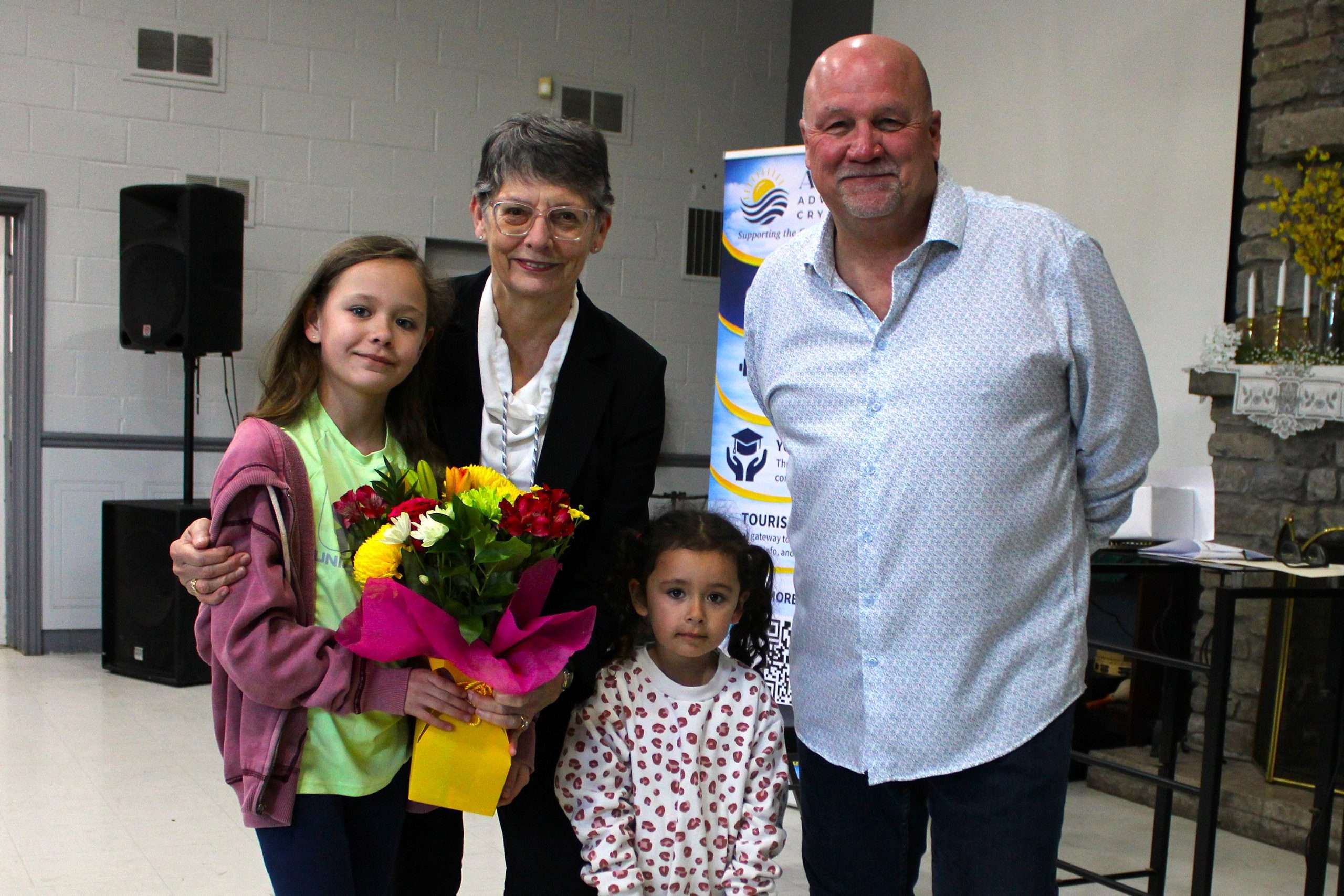 From left: Emily Carson, 10, stands with guest speaker Dr. Joanne Heritz, sister Aubrey, and Scott Boumeester following the presentation. Credit: Andrew Hawlitzky | Fort Erie Radio
Feeding her daughters Aubrey, 10, and Emily, 5, was her greatest concern throughout that period, with limited income even after securing housing.
“These children here are the only thing that kept me strong, because feeding them was more important than feeding me,” she said.
Carson reported monthly grocery costs between $1,500 and $2,000 while living on low-income housing support that leaves about $500 after rent. School meals and local food programs help stretch that amount.
“This is real and it happens every day,” Carson said.
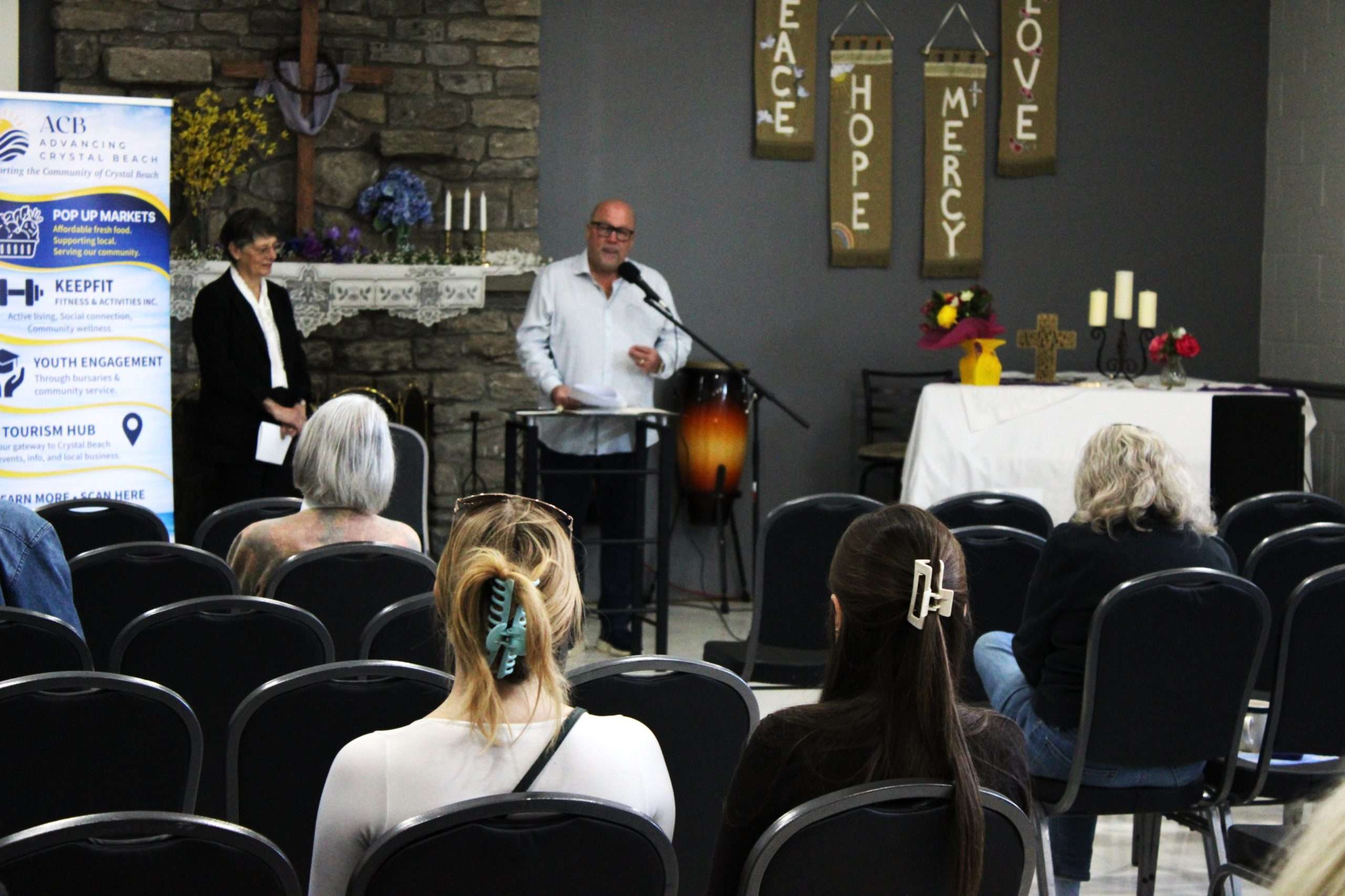 Attendees listen as Scott Boumeester outlines local efforts to expand access to affordable food programs. Credit: Andrew Hawlitzky | Fort Erie Radio
Her remarks reminded Christensen of times in her young life when her family faced struggled to put Christmas dinner on the table.
“Food insecurity and other types of poverty erode those links in the chain, and over time they erode the strength in our communities,” said Christensen. “When that happens, it erodes democracy and civil society.”
MPP Wayne Gates pointed to housing costs as the primary pressure on household budgets, with rents in Fort Erie now ranging from $1,800 to $2,700 a month for a two-bedroom unit.
“If we’re going to take on what’s going on in this process, we have to look at the bigger root cause,” Gates suggested. “What we need to do is put rent control back on new builds. That has to be done.”
Gates described the shift he’s seen in visible poverty across his riding over the past decade, including the appearance of encampments.
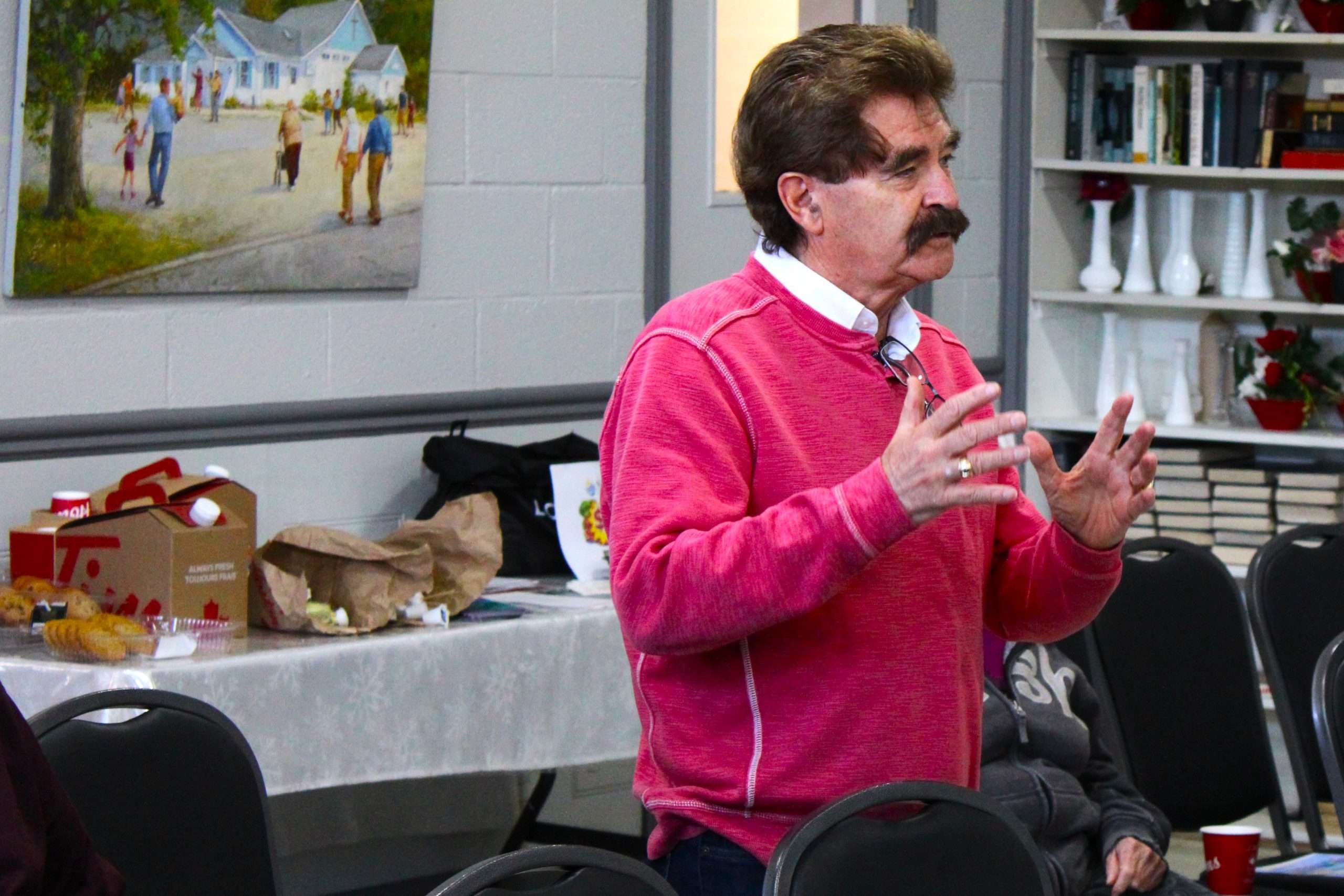 Niagara Falls MPP Wayne Gates speaks about unemployment in Ontario, where roughly 700,000 people are out of work, and its impact on food insecurity. Credit: Andrew Hawlitzky | Fort Erie Radio
“Eight years ago, we did not have one encampment in this riding. Today we have encampments everywhere,” he said. “It can happen to any of us tomorrow.”
Scott Boumeester, president of Advancing Crystal Beach, told Fort Erie Radio that additional annual funding in the tens of thousands could “flip the script” of how local services can address food insecurity in Fort Erie.
“If we had $50,000 to $75,000 more a year, it would flip our model, and we would serve so many more people,” said Boumeester. “If we’re going to dig out of this hole, we have to do it from the private sector, because the help isn’t coming.”
Dr. Joanne Heritz, an adjunct professor and research associate with the Niagara Community Observatory at Brock University, presented research on the causes and scale of food insecurity across Niagara.
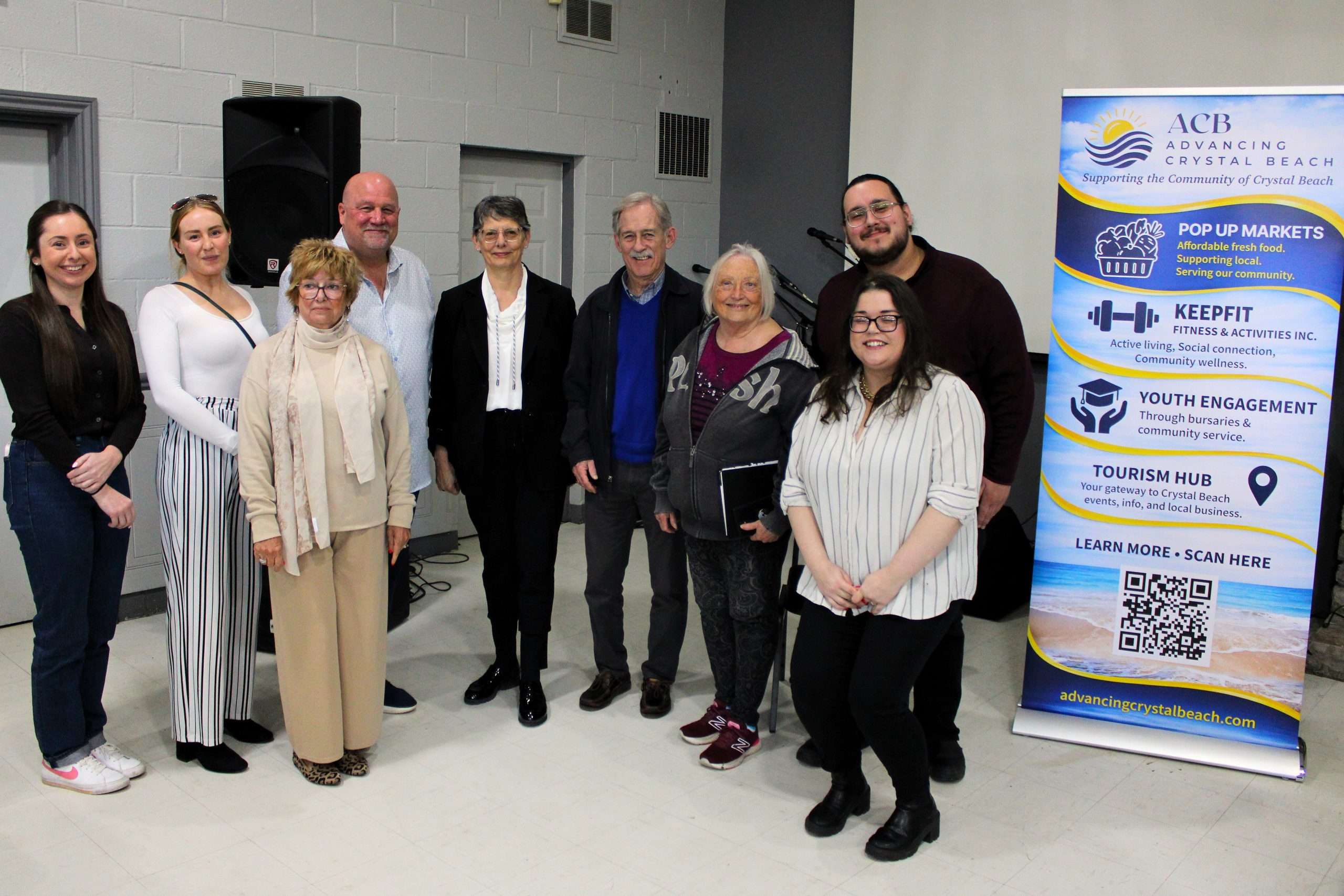 Community organizers, volunteers and local advocates gather for a discussion on food insecurity and access to support programs. Credit: Andrew Hawlitzky | Fort Erie Radio
Theresa Murphy, who works with Stronger Fort Erie Neighbourhoods and Fort Cares, told Fort Erie Radio that local food banks like The Salvation Army and COPE now meet through an “anchor table” to map services, compare schedules and identify gaps, including limited access for residents who work during the day.
“We know that people are working two or three jobs just trying to survive, and they can’t come to us during the day,” Murphy said.
The meeting also referenced local initiatives such as subsidized fresh food markets and upcoming community gardens.
Carson said she shared her story to make visible a problem that many residents do not see.
“People have to see it. A lot of people don’t see it, so hearing it and saying there’s somebody here in the community, they have to know it,” she said.
Organizers plan to hold additional quarterly meetings as they seek funding commitments and coordinate services across agencies, with further discussions expected on expanding program hours and local food production.

Stevensville church has activities for local kids on upcoming PA Day

Navy League Cadets hosting pancake breakfast on Sunday

SPCA to hold 12th annual Dog Walk-A-Thon this Sunday
About The Author

Andrew Hawlitzky
Andrew is a Niagara community journalist who has covered everything from local politics to annual festivals and breaking news. He works to make local news a platform where community voices lead the conversation. "If you don't like the news, go out and make some!"

Stay Informed