
Coldest Night targets $50,000 for fundraiser walk February 28
February 11, 2026 at 4:38 AM


Fifty-one registered walkers across 12 teams have signed up for the Coldest Night of the Year fundraiser set for February 28, with the Brain Injury Association of Fort Erie (BIAFE) seeking $50,000 to sustain programs for residents with acquired brain injuries.
Event director Jacob Schmitt said about 20 per cent of the goal has been achieved so far, but the vast majority of donations typically come in the final two weeks before the event.
The annual winter walk funds weekday support programs for roughly 100 local clients living with acquired brain injuries, many of whom rely on disability income and face rising costs for housing, food, transportation and basic communication that affect health care access and community participation.
Schmitt told Fort Erie Radio that participation metrics are exceeding previous years. The association exceeded its $30,000 target last year with about $33,000 raised, which led to organizers setting this year’s goal $20,000 higher.
“Everything always comes in the last two weeks. It is extremely stressful up until literally the day of the event,” said Schmitt.
He said outreach has expanded over the past year through collaboration with Coldest Night event directors across Niagara, local public and Catholic schools, service clubs and businesses. Information packages and partnerships aim to raise awareness about brain injury supports and increase participation in the event.
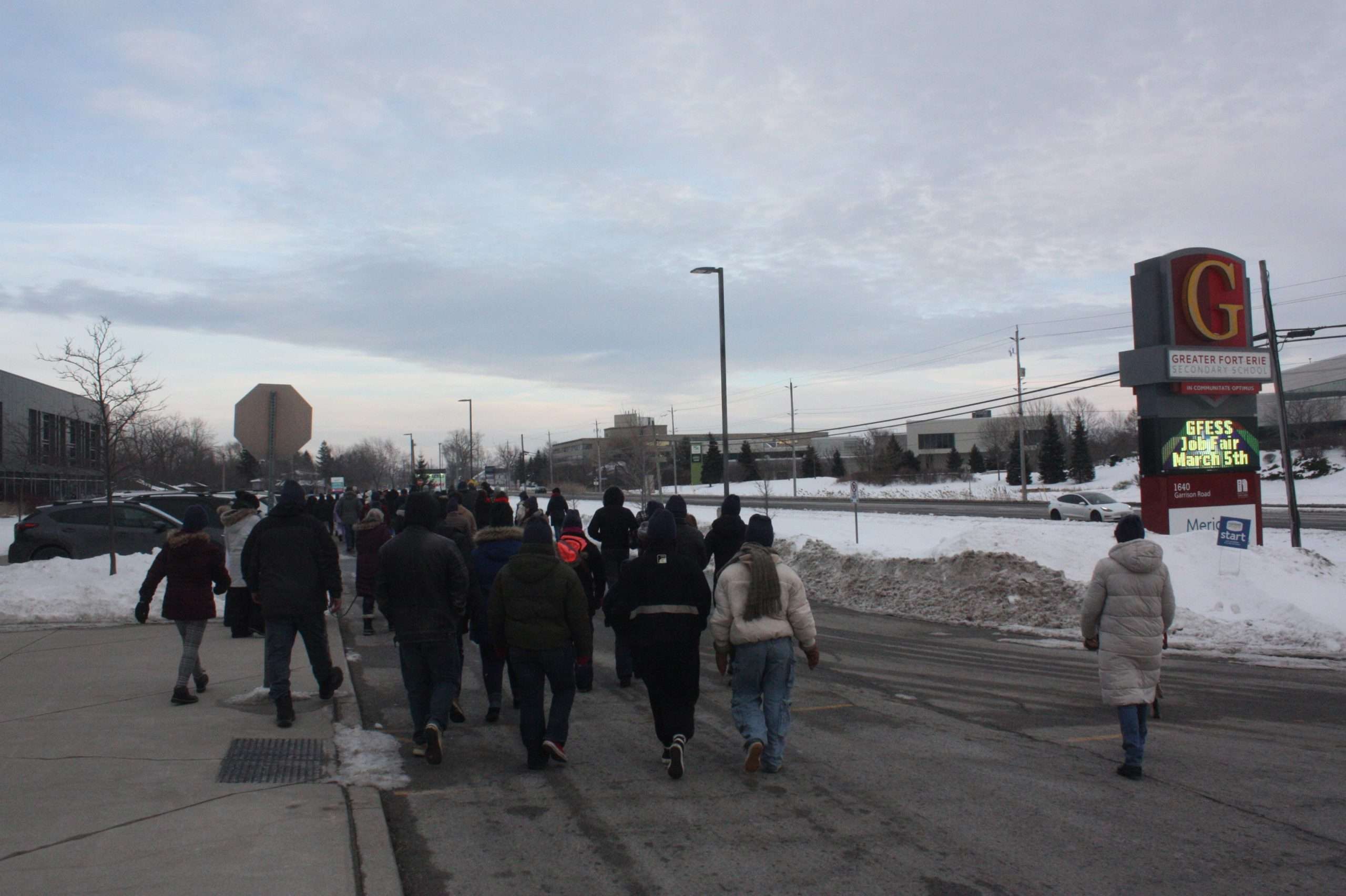 Close to 120 people walked in last year’s Coldest Night of the Year event on Saturday. Credit: Kris Dubé
Currently, 12 teams are registered compared with about five to seven teams at a similar stage in past years. The event expects roughly 100 participants, including volunteers, on the day of the walk.
BIAFE programs funded through the walk operate Monday through Thursday and include home visits, rides to medical appointments, assistance with ODSP paperwork, social programming and community integration activities. Funding also covered basement electrical and plumbing repairs in the BIAFE building that could interrupt services if left unrepaired.
“For a long time, we were getting by by the skin of our teeth,” Schmitt said, noting many clients cannot return to work because of long-term cognitive or physical effects from brain injury. Disability payments often remain fixed while living costs rise.
“If you think about people who are on programs like ODSP, these things, financial pressures, affect them in ways that are magnified by a hundred times,” he said.
Telephone access has become a recurring issue because health providers often require phone contact for appointments. Food insecurity, housing stability and transportation costs also continue to affect daily living for brain injury survivors, according to Schmitt.
The BIAFE added midweek drop-in programming this year after hiring staff member Diane Lawrie, whom Schmitt described as “phenomenal” at assisting brain injury survivors with daily living. The sessions on Wednesdays and Thursdays allow clients to seek help without joining structured group programs, including assistance with paperwork, appointments and practical needs.
Schmitt said the event also aims to strengthen long-term relationships with businesses, service clubs, and residents who may later support programming or partnerships beyond the fundraiser.
“If we fail to meet the goal next year but we build relationships this year, that means that in two years we will reach the goal, then I am happy with that.”
Residents can register, donate or join a team through the national Coldest Night website. Participation is still welcome on event day without prior registration.
“If you show up with $2 in your pocket the day of the event, but you have not registered, I would love to have you,” said Schmitt.
Fort Erie raises Community Living flag to kick off awareness month
Crystal Beach art and craft show rescheduled to July 25

Happy Days Sanctuary to host barbecue fundraiser on Saturday
About The Author

Andrew Hawlitzky
Andrew is a Niagara community journalist who has covered everything from local politics to annual festivals and breaking news. He works to make local news a platform where community voices lead the conversation. "If you don't like the news, go out and make some!"

Stay Informed