
‘We want a full-service hospital to move into the future’: Healthcare summit organizer
September 26, 2024 at 5:34 AM


A few dozen invited people participated in a healthcare summit Wednesday, an event hosted by a grassroots group determined to save Fort Erie’s Douglas Memorial site.
But this is a fight that goes back about 20 years when the Niagara Health System (NHS), now Niagara Health, was established.
In 2008, the health system released its hospital improvement plan, which recommended the closure of the site’s emergency room and a conversion to an urgent care centre.
This was followed by petitions, a rally at the Leisureplex attended by thousands of residents, and several other efforts to challenge plans NHS had for the site, as well as requests that the province intervene.
In 2009, a candlelight vigil held on Bertie Street to show frustration with the impending cut in services turned ugly when Dr. David Henry, the site’s chief physician at the time, was arrested and handcuffed while face down against a police cruiser. He could be seen kicking the police car before he was cuffed.
Douglas Memorial was officially downgraded to an urgent care centre (UCC) the same year.
A fight continued for a couple of years but has gained momentum again recently since the community learned the Douglas Memorial facility was to no longer be open 24 hours in 2023, and that its closure would be a result of the new hospital currently under construction in Niagara Falls.
On Wednesday, Fort Erie Healthcare SOS hosted a summit, attended by residents, business leaders, healthcare professionals, elected officials, and community groups, at the Crystal Ridge Community Centre.
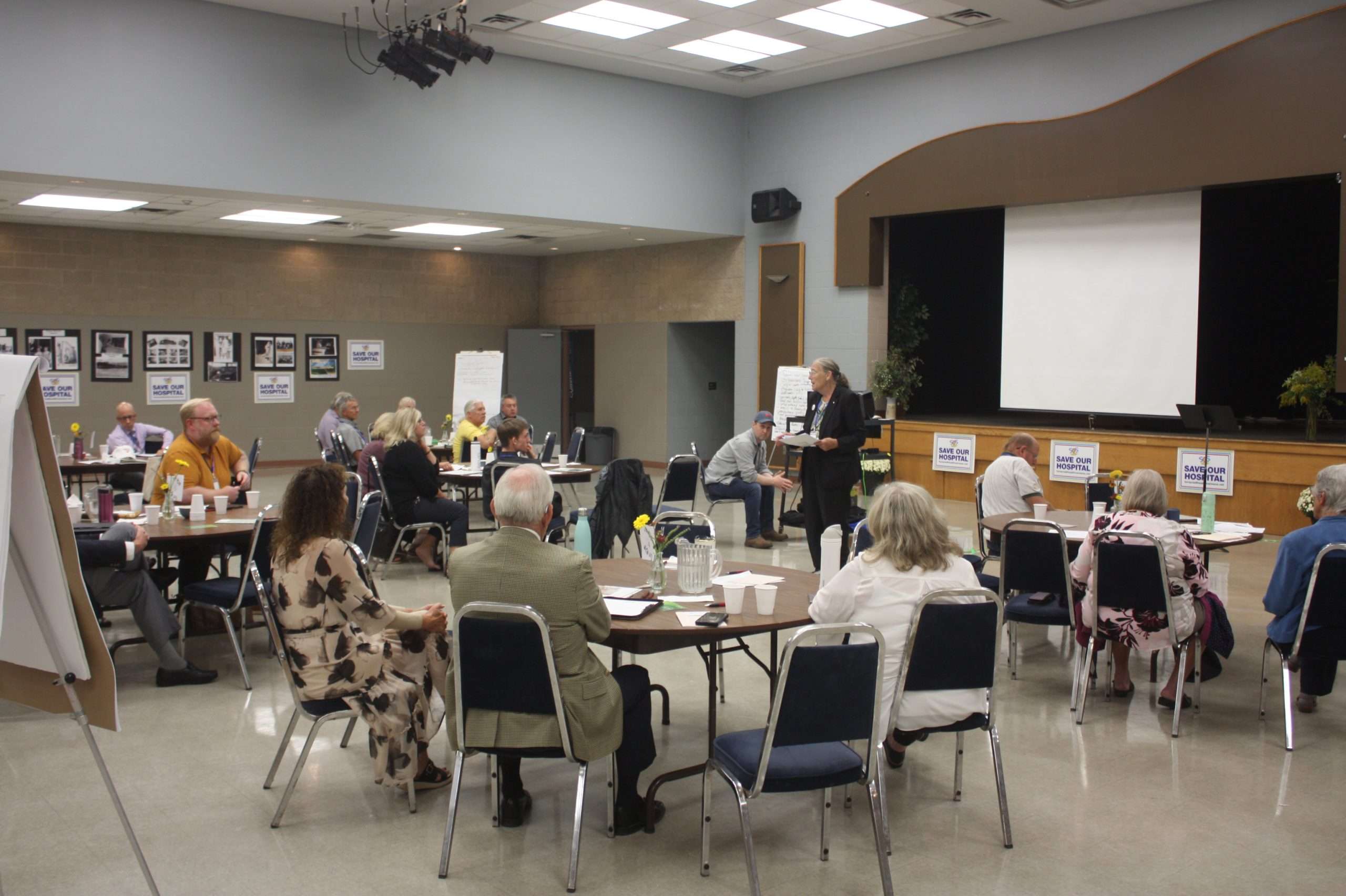 Fort Erie Healthcare SOS founder Heather Kelley speaks at Wednesday’s summit. Credit: Kris Dubé | Fort Erie Radio
The group has heard “over and over” from people in town that a 24/7 facility is needed, and that’s the argument that will be taken to the provincial government after this week’s forum.
“Niagara Health has basically disengaged from Fort Erie,” said Heather Kelley, the founder of the Fort Erie SOS Healthcare.
“The writing was on the wall we were going in two different directions,” said Kelley, when asked about Niagara Health recently pulling out of the town’s community healthcare services committee.
Kelley said the province and Niagara Health need to realize Fort Erie isn’t the same place it was in 2005 when the NHS took over, or when the hospital improvement plan was implemented.
“I think times have changed, the people have changed, and the population has certainly changed,” Kelley said in an interview with Fort Erie Radio following the conclusion of Wednesday’s summit.
“We want a full-service hospital to move into the future,” she said, adding that services need to be maintained once Niagara Health moves out when the South Niagara hospital is built, which is expected to be complete in 2028.
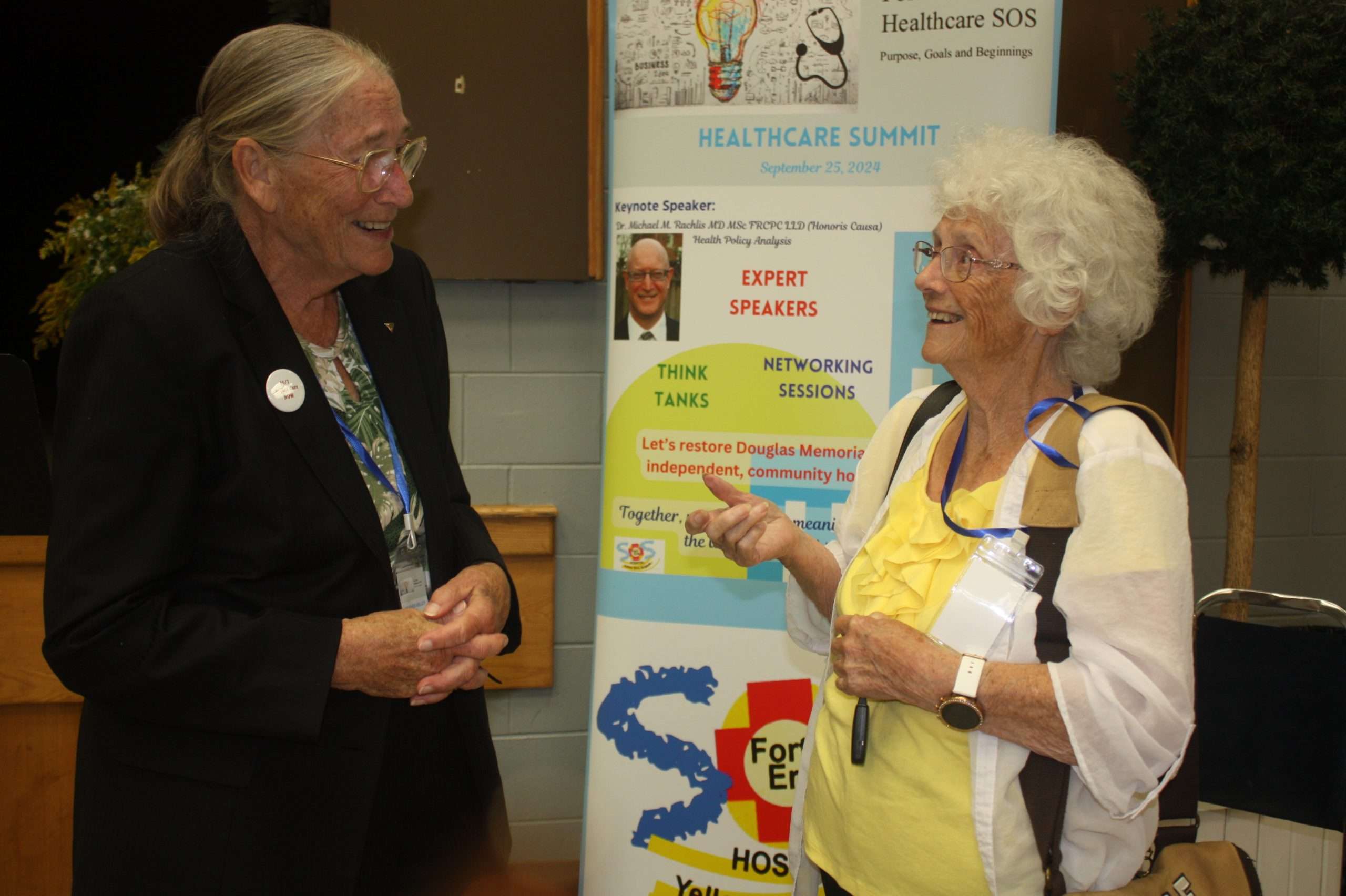 Fort Erie Healthcare SOS founder Heather Kelley and Joy Russell, one of the founders of The Yellow Shirt Brigade, a group who led the fight to save the Douglas Memorial site years ago. Credit: Kris Dubé | Fort Erie Radio
Earlier this year, Niagara Health provided a statement to Fort Erie Radio, saying they will turn over the Fort Erie and Port Colborne urgent care sites to the municipalities, and the future of the sites is their responsibility.
“We are actively working with them to help ensure they can maintain community-run healthcare services such as comprehensive primary care at those sites,” said Niagara Health, adding that the Fort Erie and Port Colborne UCCs “are better suited to be operated by family physician groups.”
In an interview following Wednesday’s day-long session, Fort Erie Mayor Wayne Redekop said nothing has been approved or agreed upon regarding the Fort Erie site, which has been part of the community since 1931.
He said Niagara Health took over the site for one dollar when it was created, which should be the case if and when Niagara Health packs up and leaves.
And there needs to be a plan of how it will operate before that happens.
“If it doesn’t operate as an urgent care centre, there has to be something in place before they close it and move out,” said Redekop, who attended the meeting Wednesday for about an hour.
He said it could function with another operator, and be an enhanced primary care centre that provides urgent care services 24 hours a day, seven days a week.
It should also provide diagnostics and clinics, and the plan should involve satellite offices serving people in the outlying areas of Greater Fort Erie, such as Stevensville and Crystal Beach, said the mayor.
On the heels of Niagara Health removing itself from the town’s committee, Redekop and council are requesting that he is given a chance to speak to their board, which he believes has a “complete lack of understanding about what’s on the ground here in Fort Erie.”
He called Wednesday’s workshop “very helpful” and that he hopes the community’s voice will be heard.
“First and foremost, we need to identify the needs of the community and then find a way we can proceed to meet those needs and look for potential partners,” he said, adding it also needs to be determined “whether or not the new hospital is going to meet the demands that are going to be put on it, particularly the emergency room.”
He also said “if the province is serious about meeting healthcare needs of the residents of Ontario, they’ve got to listen.”
When the new South Niagara hospital opens in 2028, it will have 469 beds, adding 156 new beds to the hospital system.
Niagara Health said it appreciates people’s concerns about maintaining healthcare services in their communities.
“Niagara Health, a hospital, must evolve to overcome the challenges of today’s healthcare system, including competing for doctors, nurses and other health professionals, and keeping up with advances in technology and how healthcare is delivered,” said Niagara Health’s statement from earlier this year.

Fort Foodie Fest offers its ‘second serving’ after success last year

New traditions forged, old rekindled at race track’s opening day

Library hosts kids chess club and teen advisory group on Monday
About The Author

Kris Dubé
Kris is a veteran journalist who has worked in Niagara for close to 20 years. He is also a lifelong resident of Fort Erie, a place he plans to call home and raise his family for many more years.

Stay Informed