
Siege weekend: ‘It all happened here’ on bloodiest battleground in Canada
August 9, 2025 at 10:39 PM


“We’re steeped in it.”
This is a statement from Daryl Learn, a local history expert and tour guide at Old Fort Erie from 2004 to 2016 who was the emcee explaining specific details about what was taking place throughout re-enactments that were part of the action Saturday during the annual siege weekend.
Spanning four decades, it is Canada’s largest and longest-running battle re-enactment, drawing hundreds of history buffs and spectators from across North America.
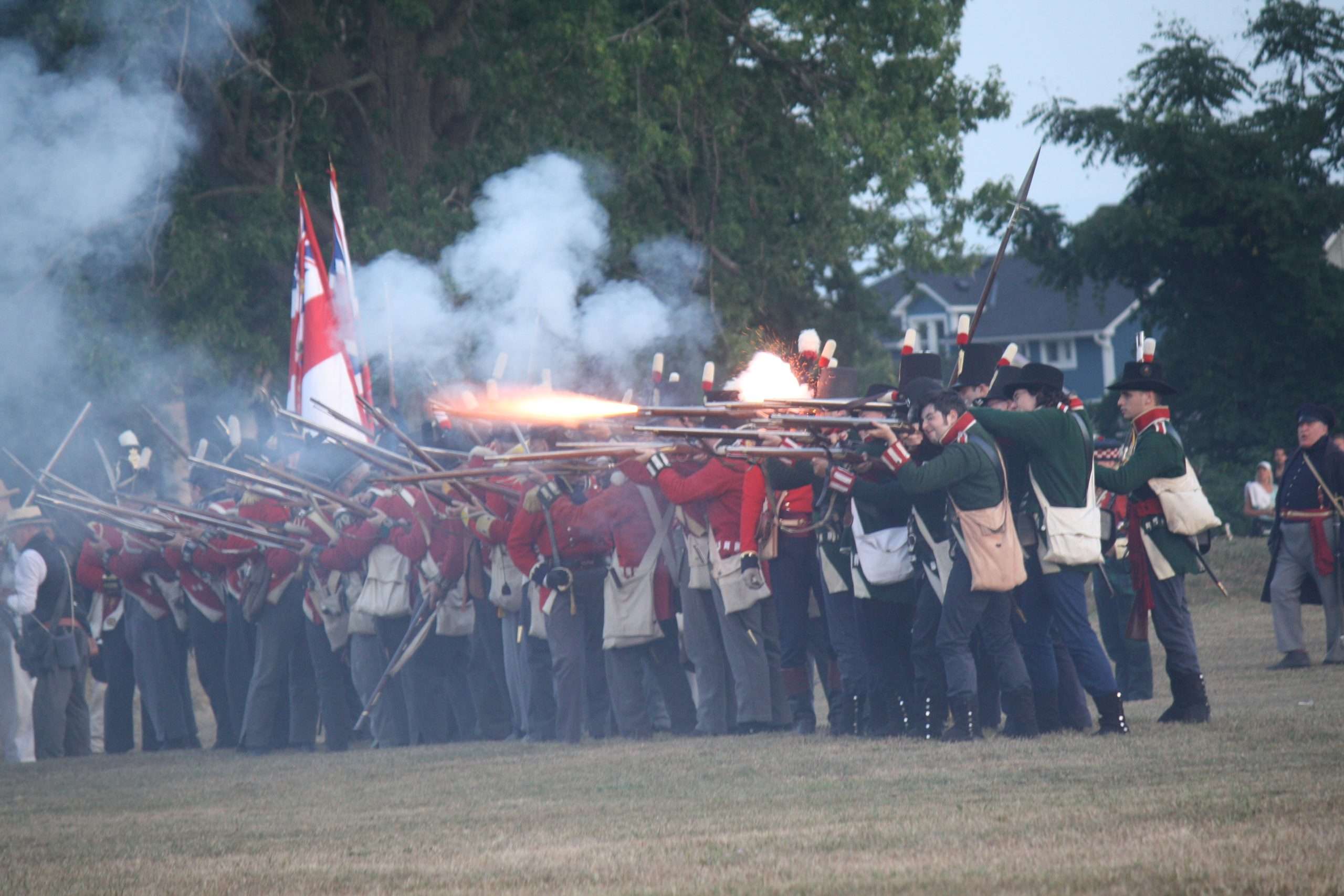 The British attack Old Fort Erie on Saturday night. Credit: Kris Dubé | Fort Erie Radio
“The re-enactors are the reason we get to do this,” said Learn, adding it’s also important that the event has always been free to attend, a reason to draw people from afar but also Fort Erie residents.
“A lot of locals don’t realize how much history there is,” he told Fort Erie Radio in an interview.
“Our history should be shared, and this is an opportunity to come and see it,” he added.
 American soldiers retreat after heavy British fire during Saturday’s siege night battle. Credit: Kris Dubé | Fort Erie Radio
Hundreds of spectators gathered to watch a night assault battle at 8 p.m. Saturday, a re-enactment of the siege, one of the final events in the War of 1812.
British forces attempted to invade the fort but the U.S. won considerably after blowing it up as British soldiers started to rush its perimeter.
The U.S. had 80 casualties and the British lost more than 1,000 soldiers in the battle, Learn told the crowd after they witnessed a massive explosion set off by pyrotechnic professionals on the south side of the fort.
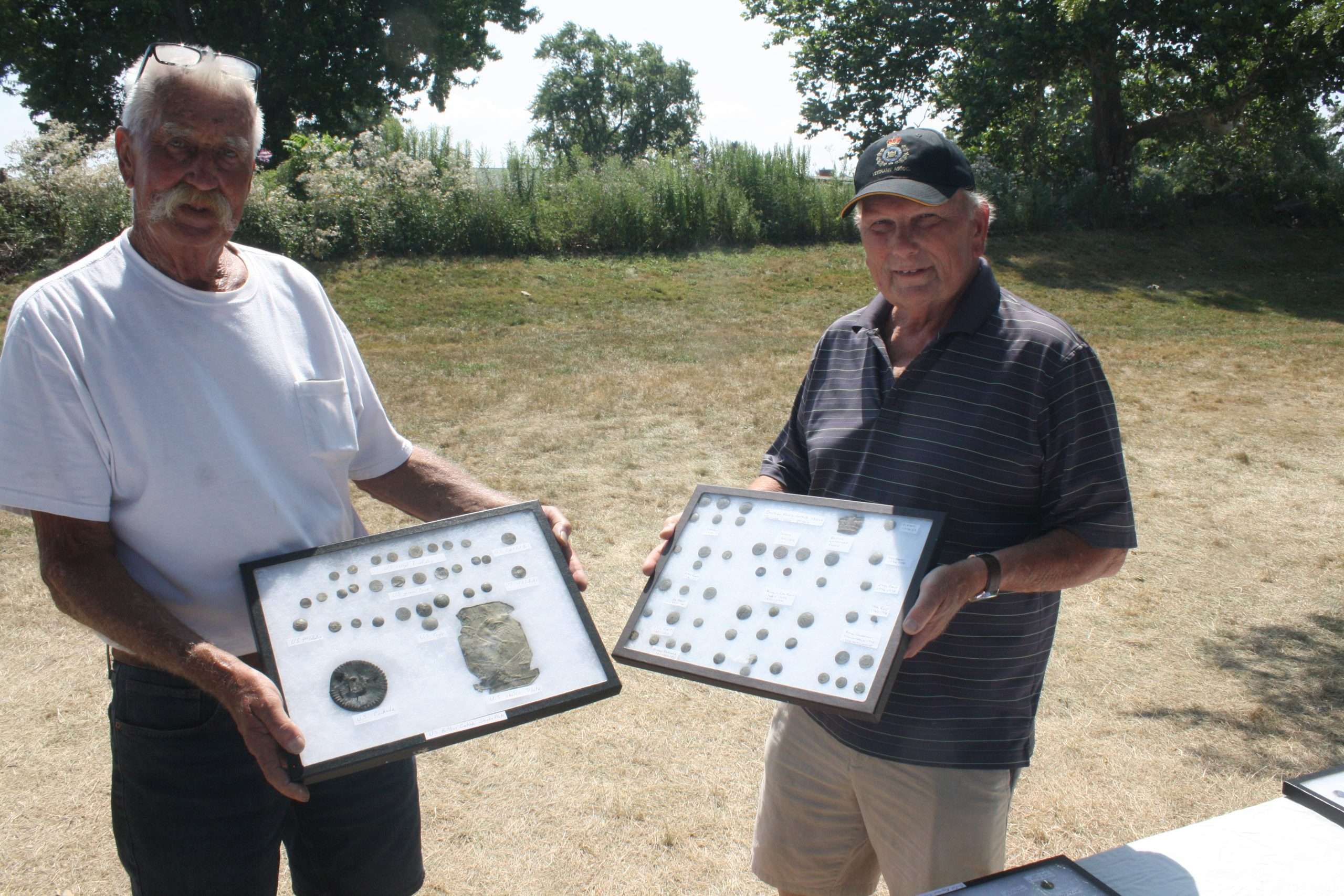 Doug Warden and Jerry DeHeus show off their artifacts. Credit: Kris Dubé | Fort Erie Radio
Earlier in the day, Doug Warden and Jerry DeHeus were showing off their collection of artifacts discovered locally, many of them in the area of Snake Hill along the Lakeshore Road waterfront near Beatrice and Albert streets.
They have buttons, tools, shoe buckles, and much more, some of it worn by British regiments.
Have they tapped everything or is there more to be found?
“I think we’ve got most of it, but it depends on how far you go out in the water,” said Warden, explaining they’ve used metal detectors and waded out into the lake during the 14 years they’ve been collecting.
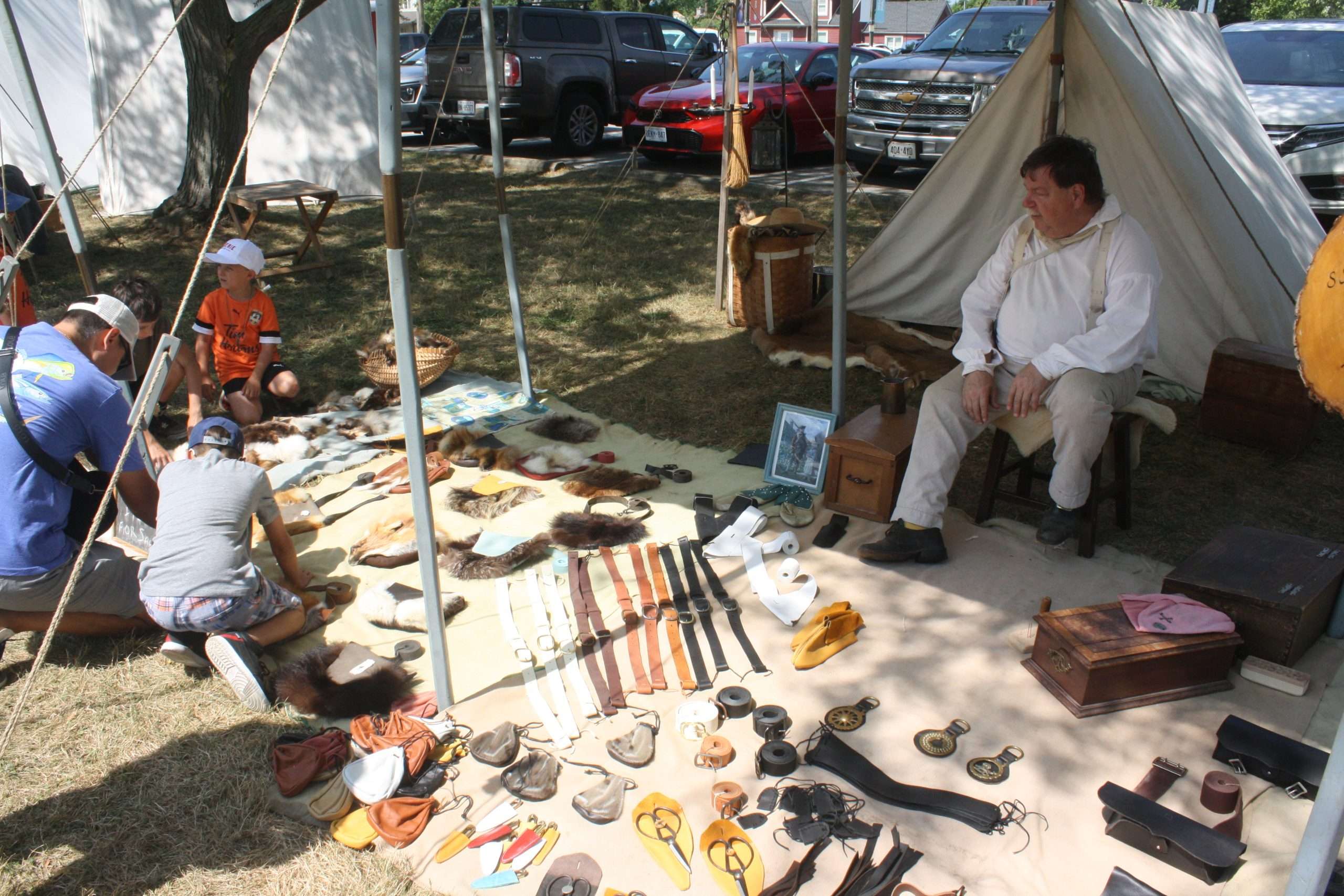 Leathersmith Terry Sanderson has been coming to the annual siege weekend for decades. Credit: Kris Dubé | Fort Erie Radio
Terry Sanderson, a leathersmith with a setup at the event hosted by Niagara Parks, has been taking part in re-enactments for more than 40 years.
Extremely fine details are part of the uniforms worn by soldiers more than 200 years ago, as well as the re-enactors who invaded Fort Erie this weekend.
“You’ll notice that all the soldiers are the same,” he said about what visitors observe during the event.
And the British government had strict rules for the men fighting for them and were handed stiff penalties if they didn’t take proper care of their garments and combat accessories.
One thing that occurred during the war was soldiers whittling down musket balls into dice for gambling, which was considered defacing the King’s property.
“They weren’t allowed to sell or trade any of it either and were responsible for maintaining it,” Sanderson told Fort Erie Radio on Saturday.
What he loves about the annual siege weekend in Fort Erie is that “it happened here,” he said referring to the battles occurring on the very soil on which the re-enactments take place.
 Hundreds gathered for Saturday’s night battle at Old Fort Erie. Credit: Kris Dubé | Fort Erie Radio
The annual weekend turns Old Fort Erie into an authentic military encampment, providing a glimpse into life during the War of 1812 and vividly demonstrating why this site became known as Canada’s bloodiest battlefield, said Niagara Parks in a news release.

Indigenous artisans raise support for Friendship Centre food pantry
Free appliance repair event May 4 at Beachcombers Seniors Centre

Cast of ‘Legally Blonde’ at GFESS having a ‘great time’ performing
About The Author

Kris Dubé
Kris is a veteran journalist who has worked in Niagara for close to 20 years. He is also a lifelong resident of Fort Erie, a place he plans to call home and raise his family for many more years.

Stay Informed