
Origin of human remains found at Niagara Parkway property a mystery
November 16, 2024 at 2:53 PM


The owners of property near the Niagara River in Fort Erie were given clearance by the province in 2022 to move ahead with a potential development after a number of studies were undertaken there, including a three-stage archaeological evaluation.
But their plans have been set back for an unknown amount of time after human remains were recently discovered at their site, located at 237 and 253 Niagara Parkway.
Although nothing has been proven, Stuart Wright and Dave Gianfrancesco have a belief as to how and why the remains were recently found.
In mid-September, the two property owners accepted 31 loads of soil taken from an ongoing construction project a short distance away on the Canadian side of the Peace Bridge where a $33-million facility to scan commercial vehicles headed into the U.S. is nearing completion.
They believe this is the reason human remains were recently found on their property, which used to be home to the iconic Ontario Bakery and other businesses.
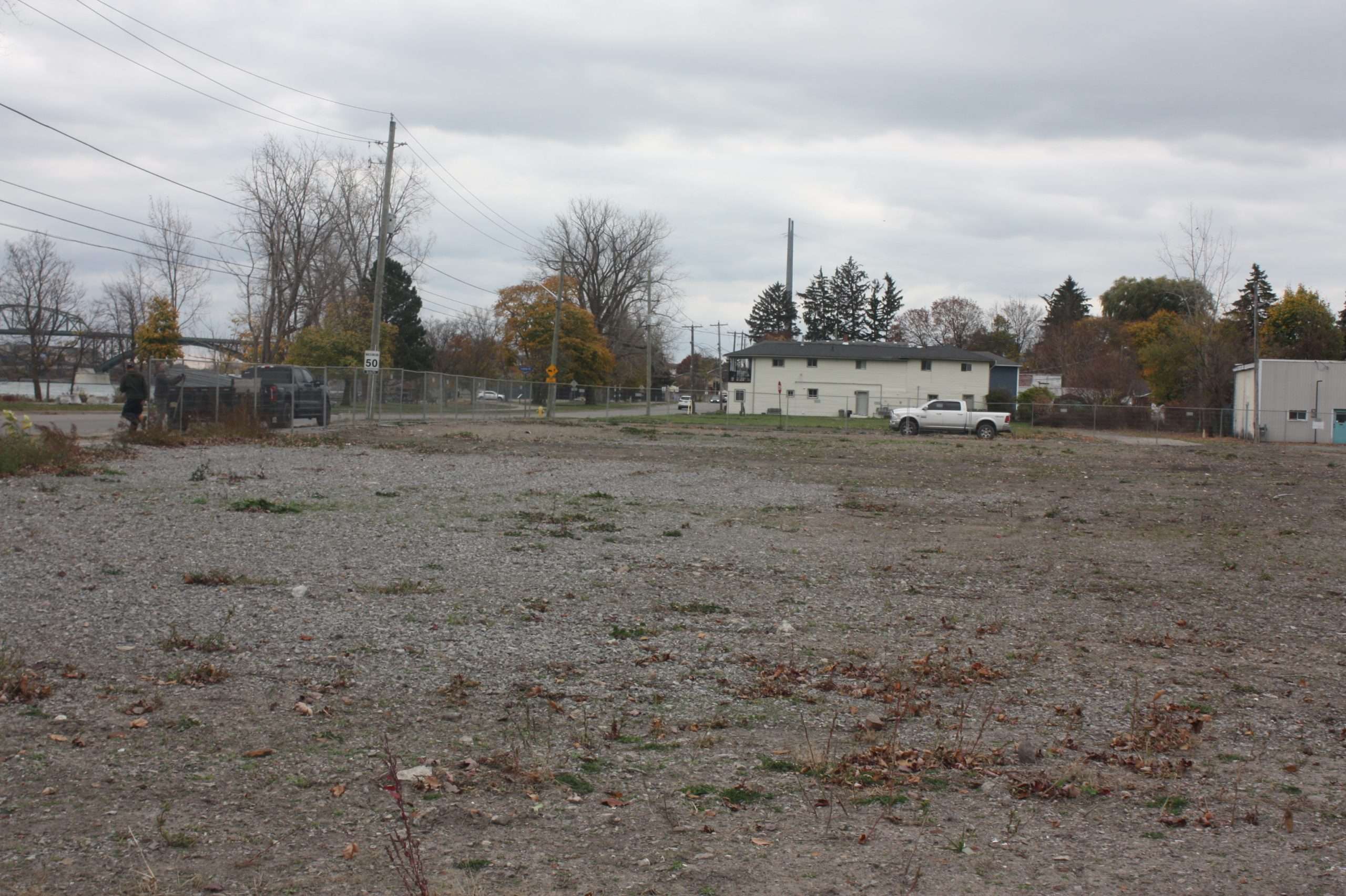 A property on Niagara Parkway where human remains were found recently. Credit: Kris Dubé | Fort Erie Radio
The soil had to be brought in to meet a requirement ordered by the Town of Fort Erie related to grading.
Wright told Fort Erie Radio that they have a strong opinion that the discovery is a result of the material from the Peace Bridge work because they already had the necessary archaeological work completed on their lands.
“We can only assume the archaeologists we hired did their job,” said Wright, who along with Gianfrancesco, has decades of experience in the local construction business.
They both told Fort Erie Radio at the site recently that it has not been communicated to them what exactly was found, but they have been forced to put their project on hold by the province until a burial site investigation is completed, a requirement under the Funeral, Burial and Cremation Services Act.
Wright said it is likely they will have to fund the study themselves, which he said could cost close to $1 million, on top of the roughly $2 million already invested in the property since they acquired the first parcel in 2017.
He also wonders if there will be other similar situations arising in the region where material taken from the work at the Peace Bridge has also been moved to. If this does become realized, it may help their position, he said.
“But if it’s an anomaly here, then it’s isolated to this site,” said Wright.
Both Wright and Gianfrancesco are hopeful for a resolution and said they will cooperate with the upcoming investigation.
“We don’t want to create problems. We just want to work collectively and move forward together,” said Wright.
Buffalo and Fort Erie Public Bridge Authority (PBA) general manager Ron Rienas said there is “very little information” about the situation currently, but noted that he and his staff, as well as Rankin Construction, who is the lead on the project, will also be co-operating.
He said there are multiple possibilities, such as something being unearthed that was already there when the imported soil was spread out over the Niagara Parkway site. Or perhaps something was not discovered when the first archaeological studies took place.
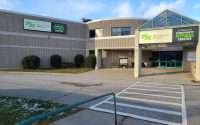
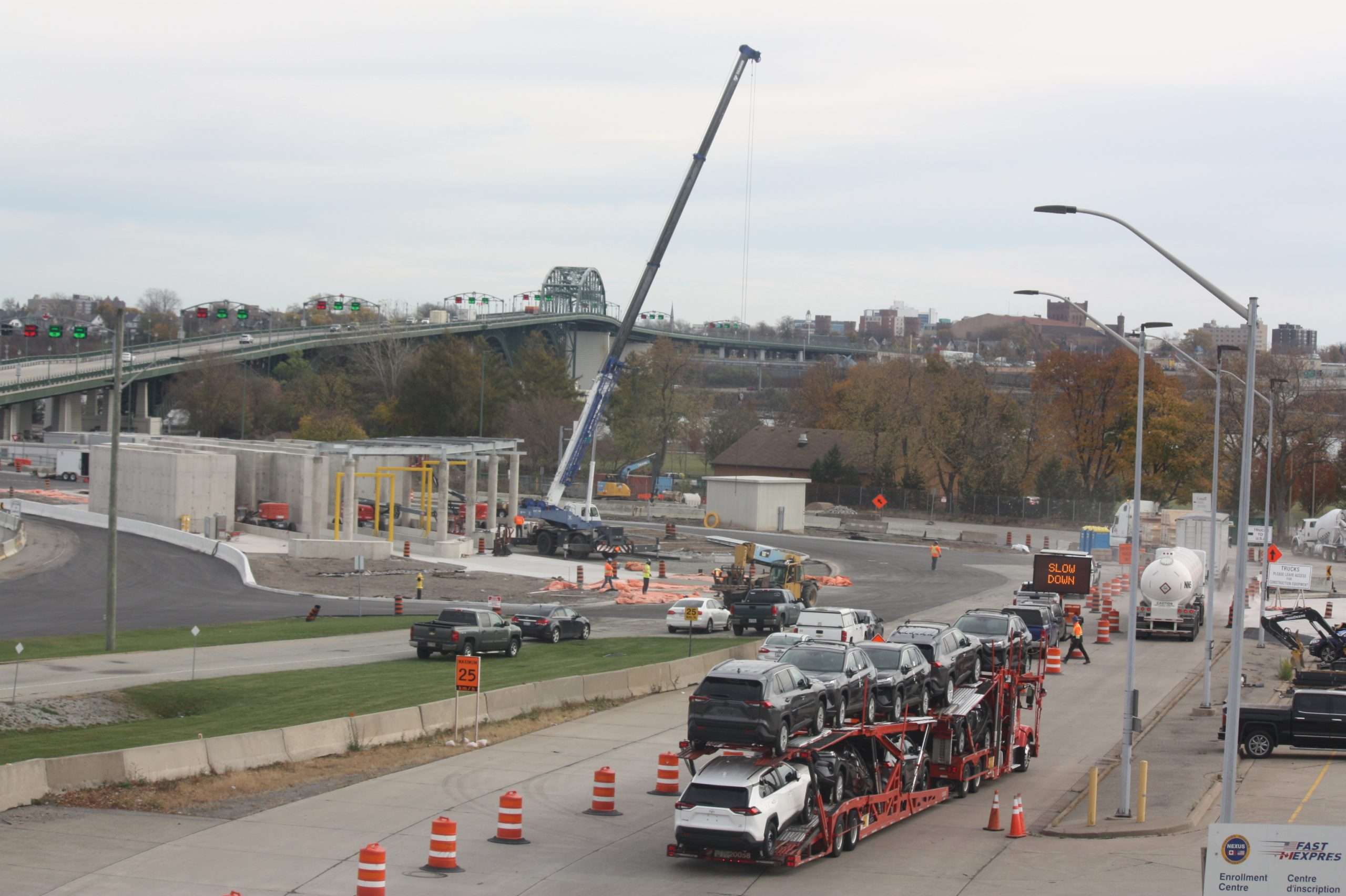 A new facility being built at the Peace Bridge that will scan trucks as they head into the U.S. Credit: Kris Dubé | Fort Erie Radio
But the PBA is “not denying” responsibility or saying “yes or no” that the remains at the Parkway site came from the area of the bridge.
Rienas said the Pre-Arrival Readiness Evaluation (PARE) project is being built on a “heavily disturbed” area, one that has seen multiple cycles of construction and demolition in the Peace Bridge’s nearly-100-year existence.
This means it’s unlikely to be holding something of significance and that it doesn’t have “high archaeological potential,” said Rienas.
In the mid-1920s, it was home to the first bus inspection facility, and later was where primary inspection occurred.
“That’s why we proceeded with the construction,” said Rienas, adding that before construction started on the new facility a number of soil tests were conducted in the area, which he said could’ve also uncovered remains if there were some there.
Nothing was found as the site was excavated, Rienas noted as well.
But the PBA is taking this matter seriously, he said, adding that the Fort Erie Native Friendship Centre has already been contacted, telling them that “once we get more into it, and actually find out what’s going on, we would treat any remains with dignity and respect.”
And if the claims being made by Wright and Gianfrancesco end up being the truth, Rienas said the PBA will act accordingly.
“If it’s something that can be demonstrably proven, that it’s from our site, we’ll act responsibly and do what needs to be done,” said Rienas.
The Office of the Chief Coroner and Ontario Forensic Pathology Service was contacted to determine if remains found in Fort Erie were human, explained spokesperson Stephanie Rea.
Human remains were confirmed and there is no foul play involved.
Jurisdictional responsibility has been handed to the Registrar of the Funerals, Burials and Cremations Services Act “to determine next steps regarding the site, including working with the landowner and municipality to determine if the site is a previously known burial site and to ensure appropriate management of the remains,” said Rea.
If human remains were transported between sites, it’s not highly unusual.
“As municipalities and communities build and grow, discoveries of human remains are not uncommon,” Rea said in a statement to Fort Erie Radio.
“There have been few instances of remains of a historic nature being inadvertently moved during the course of construction. Each case is different, but the Office of the Chief Coroner and the Registrar work with municipalities and Indigenous communities to ensure the remains are respectfully cared for,” she said.
Coincidentally, another archeological dig has been taking place next to Wright and Gianfrancesco’s property, part of an overhaul of a Niagara Region wastewater treatment plant at Niagara Parkway and Catherine Street.
Involved in that effort are Mississaugas of the Credit First Nations and archaeological operations supervisor Adam LaForme.
“All I can say is I’m aware of the discovery,” said LaForme, also confirming he will be taking part in the investigation next to where he has been working for several months already.
Railway museum on track for 29th season with new exhibits
Vacancies: 6 of 7 Palmwood condo units in Crystal Beach still empty
BGC Niagara launches toy drive to spread holiday joy to kids
About The Author

Kris Dubé
Kris is a veteran journalist who has worked in Niagara for close to 20 years. He is also a lifelong resident of Fort Erie, a place he plans to call home and raise his family for many more years.

Stay Informed