
Fort Erie pumping station failure results in 5,300 litres of sewage flushed into Niagara River
October 19, 2024 at 4:47 AM




More than 5,000 litres of sewage were flushed into the Niagara River recently as a result of poor and out-of-date infrastructure.
The incident occurred September 9 but was explained on October 4 to regional councillors in a weekly correspondence list issued every Friday.
A result of a failure at the Lakeshore Road pumping station in Fort Erie, the sewage was flushed into the river for 52 minutes.
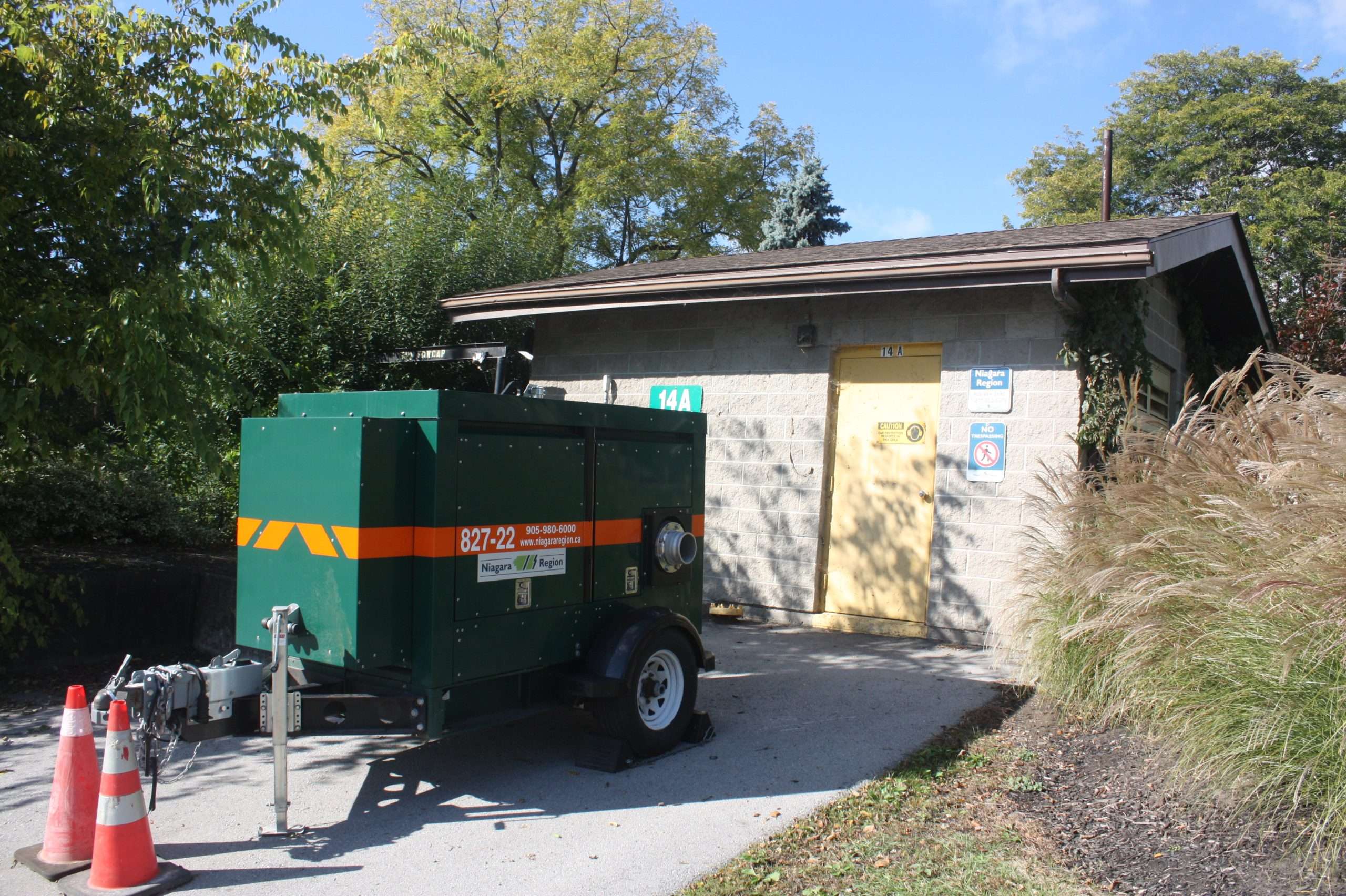 The Lakeshore Road pumping station is the recent cause of 5,300 litres of sewage being pumped into the Niagara River in Fort Erie. Credit: Kris Dubé | Fort Erie Radio
In an interview, Fort Erie Regional Councillor Tom Insinna told Fort Erie Radio that he’s troubled by this correspondence being sent nearly a month after the incident.
“If something like this happens, people need to be informed,” said Insinna.
The facility is equipped with two pumps to convey sewage to the Anger Avenue wastewater treatment plant, and is also equipped with a third pump meant to handle overflow during wet weather by pumping sewage and stormwater to the environment to prevent basement flooding, explains the memo about the incident.
But on September 9, a cable restraint and electrical supply for pump one deteriorated and fell into the pumping station wet well. The cables were sucked up by pump two causing it to stop working as well as a power failure.
Pump one was also inoperable as there was no power supply.
“As the regular duty pumps were unable to remove the sewage, the station wet well level increased until the overflow pump was activated by the high level and began discharging sewage to the Niagara River,” regional staff explained, also noting an inspection indicated there were no “adverse effects from the spill.”
Sewage was then hauled to the Anger Avenue treatment plant and staff made repairs to put it back into service, and ongoing work is also being done to prevent another similar incident, the Region said.
As well, major capital upgrades are scheduled to take place at the pumping station in early 2025.
The total budget for the upgrades is $7.4 million, director of water and wastewater services Phill Lambert told Fort Erie Radio in a statement.
The most recent incident at the pumping station, built in 1985, was the “most significant maintenance issue experienced at the site to date,” he said.
The station has experienced three additional maintenance issues in the past between 2021 and 2024, which is in part why the station had been identified for upgrades.
The Region includes these types of anticipated responsive maintenance costs as part of its annual budget. The water and wastewater annual budget in 2024 was $154 million to operate, maintain and improve all of the Region’s water and wastewater assets and programs.
“When there is a spill, we follow a notification and inspection process and there was no health risk identified as a result of this occurrence,” said Lambert.
This incident was reported to the Spills Action Centre and Niagara Region Public Health. A follow up written spill report was provided to the Ministry of Environment, Conservation and Parks as required by legislation within 15 days of the incident.
Asked about the public being notified, Lambert said that while Niagara Region is only required to notify the province, they also have a procedure to inform any downstream users of spills of this nature.
In addition, the correspondence list on the Region’s website is also available to the public.
If there was a public health risk identified, which there was not, the public would be informed through an advisory from the public health department, said Lambert.
The Region is also addressing a sewage pumping station on Catherine Street near Niagara Parkway, which was commissioned in 1981 and has reached the end of its service life.
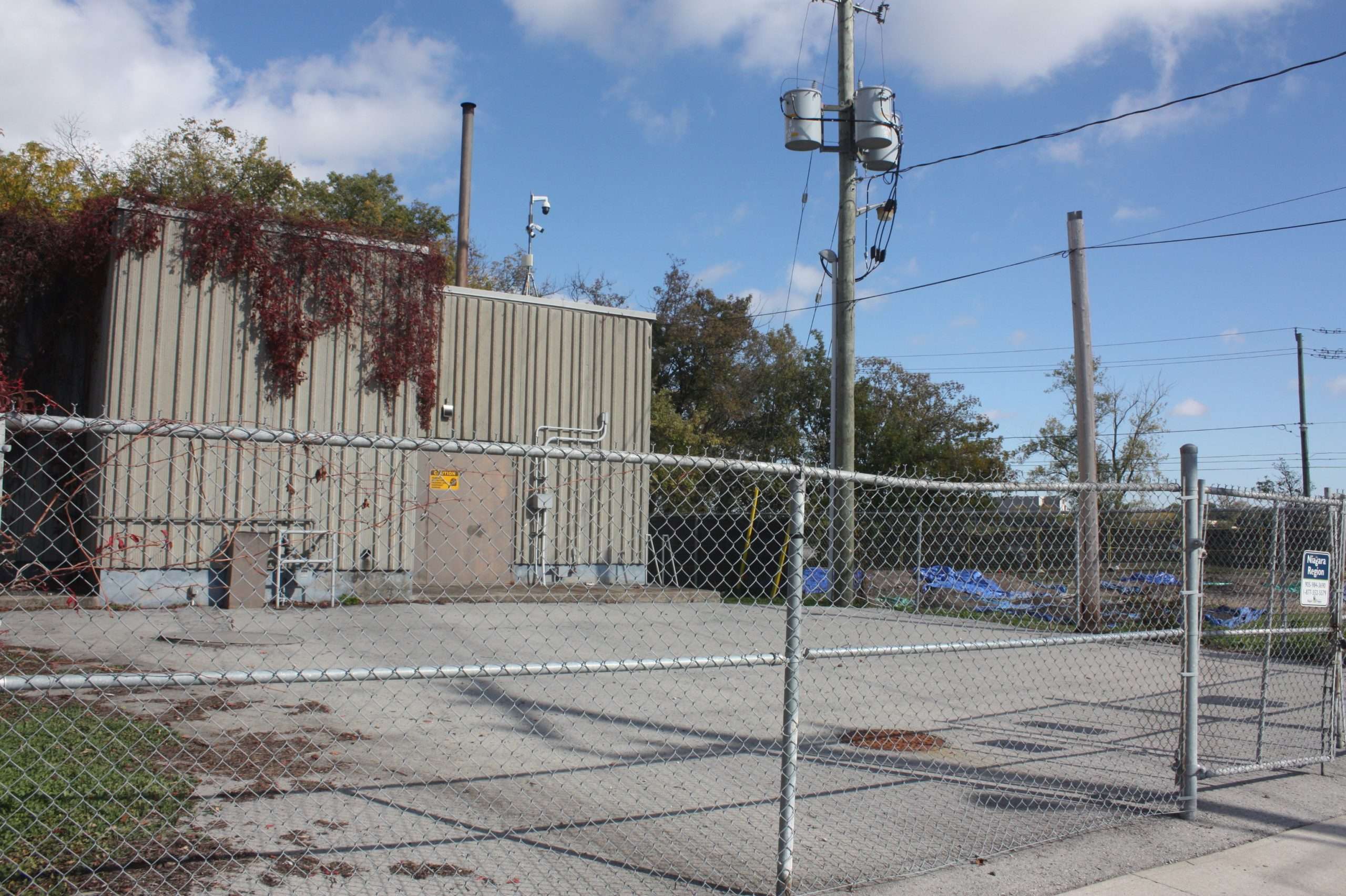 The Catherine Street sewage pumping station is slated for upgrades. Credit: Kris Dubé | Fort Erie Radio
Studies have been conducted on this site, including an ongoing archaeological assessment that started this year, costing an additional $988,000 on top of the $1.1 million already budgeted for the project, reads a report brought to the Region’s public works committee in May.
But the Region has a problem that goes well beyond sites in Fort Erie.
In early September, regional councillors heard a presentation from public works commissioner Terry Ricketts that gave some eye-opening figures.
She said the Region is behind by about $680 million when it comes to water and wastewater infrastructure investment, and that an annual increase of 7.22 per cent on regional taxes over the next decade for infrastructure improvements would be a way to tackle the problem.
Insinna told Fort Erie Radio that this year’s capital budget is set to include a technology system used to track potential breakdowns.
But this is a “Band-Aid solution” that needs more, especially as the population grows and more homes are built.
“If you don’t have the infrastructure to support it, you’re not doing yourself any favours,” he said.
He said the provincial and federal governments need to step in and provide funding.
“For the Region to do it on its own, it’s not going to happen,” said Insinna.
Mayor Wayne Redekop, also a regional councillor, said it’s more important that the Region funds a solution than dissecting why there has been so much inadequate investment leading up to the situation the Region finds itself in today.
“We know it needs to happen in order for people to continue to rely upon safe drinking water and safe treatment of wastewater,” Redekop said in an interview with Fort Erie Radio.
He admits said incidents such as the one at the Lakeshore pumping station occur periodically, but that it is important upgrades are made for regional and municipal governments to stay competitive when attracting business and new homes.
“If (pumping stations) can’t be relied upon to treat the flows that are going through them, that puts a hold on development,” said Redekop.
“We can’t build the homes people want and need if we don’t have the infrastructure,” said the mayor.
“The Region is going to have to look at every possible way they can manage to maintain the infrastructure, upgrade it, and be more efficient,” he added.
He said it is vital that the planned upgrades to pumping stations, such as the one on Lakeshore Road, remain on schedule.
“They can’t delay it, that’s for sure,” he said.
Elsewhere in Niagara, there are other major backlogs of investment that make up a large portion of what the regional government is behind on.
The Decew Falls water plant is 99 years old and is is behind by $195 million in upgrades, commissioner Ricketts’ presentation said.
Niagara Falls has a plant that is 94 years old and requires $43 million in upgrades.
Welland’s water plant is 113 years old and needs $44 million invested into it.
In Fort Erie, the Rosehill Road water plant, built in 1982, is behind by more than $16 million and is considered in “very poor condition,” according to last month’s presentation.
The Anger Avenue wastewater treatment plant is 62 years old and is lacking more than $43 million in needed investment.
The Crystal Beach wastewater plant, more than 50 years old, is behind by nearly $4 million.

Competitive girls’ softball returns to Fort Erie after 25 years
Season passes for Bay Beach now available

Douglas Memorial team awarded top honour at Niagara Health awards
About The Author

Kris Dubé
Kris is a veteran journalist who has worked in Niagara for close to 20 years. He is also a lifelong resident of Fort Erie, a place he plans to call home and raise his family for many more years.

Stay Informed