
Niagara regional chair Bob Gale’s resignation ‘very unexpected’: Redekop
March 12, 2026 at 4:25 AM


Niagara regional chair Bob Gale resigned Wednesday night in a letter defending his plan to amalgamate Niagara’s municipalities, an effort Mayor Wayne Redekop believes will likely stall without Gale at the helm.
Gale stepped down hours after controversy erupted earlier in the day over a leak about his ownership of a signed copy of Adolf Hitler’s ‘Mein Kampf,’ leaving the future direction of Niagara’s governance debate uncertain and shifting control of Niagara’s political leadership back to the provincial government.
Redekop told Fort Erie Radio Wednesday night that Gale’s resignation was “very unexpected.” He had not seen Gale’s resignation letter, which had been circulated to several Niagara news outlets.
Gale acknowledged the opposition to Niagara’s proposed amalgamation and stated the controversy was the main reason for his immediate resignation in the letter dated March 11 and addressed to Ontario Municipal Affairs and Housing Minister Rob Flack.
“There was a strong vocal minority who decided they would stop at nothing in order to keep their fiefdoms and addiction to power and tax dollars,” Gale stated in his letter.
Redekop rejected that characterization, stating that the level of mayoral support for amalgamation had been overstated to the provincial government and communities should be able to decide the governance structure that best suits their needs.
“If that’s protecting a fiefdom, then so be it,” he said on Wednesday night.
“I believe that somebody had led the premier to believe that there were up to seven mayors in Niagara willing to consider amalgamation. In fact, there really were three, maybe four. The other eight were clearly opposed entirely.”
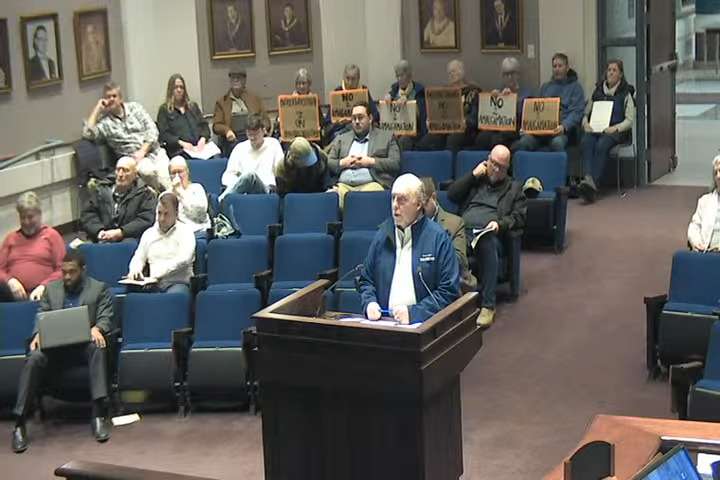 Niagara regional chair Bob Gale answers questions from Fort Erie council during a regular meeting on February 23, 2026. Credit: Town of Fort Erie | YouTube
Last week, Redekop and seven other Niagara mayors called on Premier Doug Ford for a regional governance overhaul to reduce costs and duplication while rejecting outright amalgamation.
Gale retreated from his earlier proposal for amalgamation hours later in a separate letter to Flack, and instead proposed a different structural change that would shrink regional council and introduce population weighted voting.
Redekop believes the sudden departure removes the main political advocate for municipal consolidation across the region.
“I think the amalgamation issue isn’t going to be moving forward right now,” said Redekop.
Gale made clear in his letter that his efforts to reduce the size of regional council will continue despite his resignation.
“This work is bigger than any one person, including me. This is about making the changes for the people of Niagara who desperately need and deserve change,” Gale stated.
The controversy unfolded less than three months after Gale’s appointment as regional chair in December, when the province selected him for the role following the death of longtime Niagara politician Jim Bradley.
 Niagara regional chair Bob Gale resigned Wednesday night in a letter to Ontario Municipal Affairs and Housing Minister Rob Flack, which was distributed to multiple local news outlets. Credit: Niagara Region
Redekop said that despite their policy disagreements, he maintained a constructive working relationship with Gale.
“I always got along with Bob Gale. I thought he was quite congenial. I just don’t agree with him on his views with respect to governance in Niagara or the need for fewer elected officials,” said Redekop, who also serves as a regional councillor.
“I think he took on something that he didn’t expect would go the direction that it went. And that’s unfortunate.”
The Niagara regional chair has not been an elected office since 2022, meaning the Ford government will determine who replaces Gale as chair. Redekop said he supported a more democratic chair position like the region had prior.
“Appointing a chair is less democratic than the councillors electing a chair from among themselves, and anything that’s more democratic than not democratic, I support,” he said.
Ford supported amalgamation during a February 25 news conference at the future South Niagara Hospital site, but set conditions that any proposal must originate locally and carry broad political and public support.
“If it’s going to go, then it has to be from Niagara, by Niagara. It has to have approvals from the majority of mayors,” Ford said at the conference.
With roughly seven months remaining before the next municipal election cycle, Redekop said the province will likely appoint someone on a temporary basis.
“We’re going to continue to do the work that we were elected to do, and that is to serve the people of Fort Erie and, on a broader scale, the people of Niagara,” said the mayor.

‘Super bright’ apparent meteor streaks over Lake Erie Saturday morning
Replaced portions of breakwall in Fort Erie proving to be resilient, says Niagara Parks

GFESS student bakes sweet and savoury gold at skills competition
About The Author

Andrew Hawlitzky
Andrew is a Niagara community journalist who has covered everything from local politics to annual festivals and breaking news. He works to make local news a platform where community voices lead the conversation. "If you don't like the news, go out and make some!"

Stay Informed