
Insinna asks about ‘couch surfers’ and how Region tracks homelessness
July 15, 2025 at 3:19 AM


During a conversation about how the regional government is navigating homelessness, Fort Erie Regional Councillor Tom Insinna raised some questions on the topic.
The Region’s homelessness strategy and steps that can be taken in the next few years to play a role in improvements were an agenda item at a public health and social services committee meeting last week.
Insinna said he received calls about a homeless person in Fort Erie and that he paid a visit, only to learn that this person was reluctant to receive assistance through shelter services.
Insinna asked how the Region keeps a tally on how many homeless people there are in the Region and its communities, including “couch surfers”–those who do not have fixed address, but aren’t visible out on the street as they stay with friends and family members.
“They don’t want to be pigeonholed. They don’t want to talk to anybody,” he said.
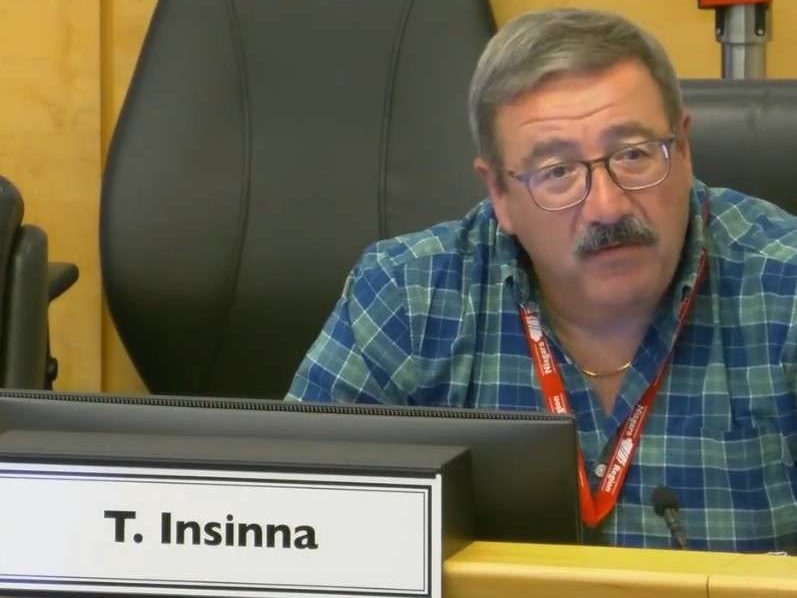 Fort Erie Regional Councillor Tom Insinna. Credit: Niagara Region
Cathy Cousins, the Region’s director of homelessness services, said this is not uncommon, and that help can be offered without the individual having to provide their name.
“We work with them, put them in as anonymous,” she said.
“We will always have individuals who are simply unwilling, unfortunately,” she added.
Insinna did not specify during the meeting in what part of Fort Erie he came across this person.
Insinna also asked about people from outside Niagara’s three big cities–Niagara Falls, St. Catharines and Welland–and how they can be accommodated if they don’t want to leave their communities to stay in a shelter elsewhere.
“You’re taking them to a different community,” said Insinna.
Cousins said a 30-day window is targeted for people who are relocated to a shelter, a short-term step in their path back to housing.
They also work with individuals to help them find a place to live in the community they are most comfortable in, where their “natural supports” are.
Insinna also asked if there is a municipal or regional tax break that is offered to people who are on the verge of losing their homes and becoming homeless.
Cousins said this idea could be noted as something for staff to look further into.
The regional government has spent $25 million to address homelessness in recent years, and more will be needed, Cousins and homelessness services manager Jeffrey Sinclair told committee members.
A two-to-three-year plan would need more than $28 million in capital investment with $7.6 million in operating costs.
Over the next four to five years, $38 million in capital and about $6 million would be required, staff said.
Friendship Trail safety improvements coming soon

Fort Erie to honour its role in the Underground Railroad

Town punts approval of Hazel Street townhouse development
About The Author

Kris Dubé
Kris is a veteran journalist who has worked in Niagara for close to 20 years. He is also a lifelong resident of Fort Erie, a place he plans to call home and raise his family for many more years.

Stay Informed